

cdsenet
Cdsenet TX915-FPC Series 868/915MHz FPC Antenna 2.0dBi IPX LoRa IoT
Cdsenet TX915-FPC Series 868/915MHz FPC Antenna 2.0dBi IPX LoRa IoT
10000 in stock
Couldn't load pickup availability
SKU:tx915-fpc-4510
Product Overview
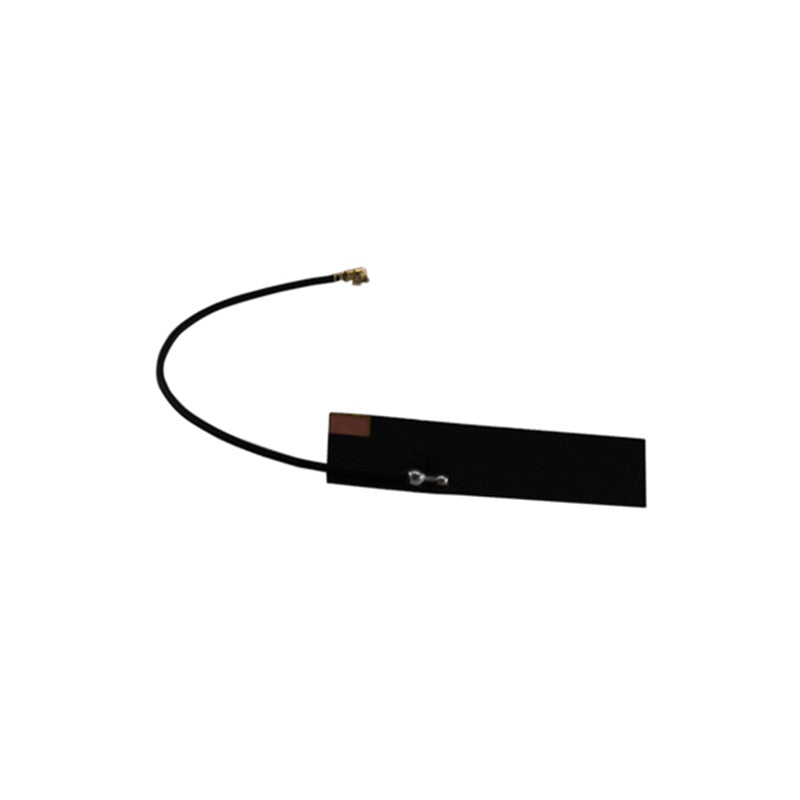
The TX915-FPC-4510 is an 868/915MHz FPC (Flexible Printed Circuit) internal antenna engineered for LoRa, LoRaWAN, and LPWAN IoT devices. It delivers a measured peak gain of 2.0 dBi and a typical VSWR of 1.24 at 915MHz, covering the 868–930MHz band used by LoRaWAN EU868 (Europe), US915 (North America), AU915 (Australia), and AS923 (Asia) regional plans. The compact 45 × 10mm FPC radiator with a 100mm IPX-I feeder enables seamless integration into smart agriculture sensors, utility meters, and industrial LPWAN nodes. Updated March 2026.

Technical Specifications
| Parameter | Value |
|---|---|
| Frequency Range | 868 – 930 MHz (EU868, US915, AU915, AS923) |
| Peak Gain | 2.0 dBi |
| VSWR | ≤ 2.0 (Typ. 1.24 @ 915 MHz — measured with Agilent E5071C) |
| Impedance | 50 Ω |
| Connector Type | IPX-I (IPEX Gen 1 / U.FL compatible) |
| Cable Length | 100 mm (gold-plated connector) |
| Antenna Dimensions | 45 × 10 mm |
| Radiator Material | FPC (Flexible Printed Circuit) |
| Max Input Power | 50 W |
| Operating Temperature | -40 °C to +85 °C |
| Compliance | RoHS |
| Last Updated | March 2026 |
Product Details
45 × 10mm FPC Radiator — Bend-to-Fit for LoRa Enclosures
The precision-etched FPC substrate measures just 45 × 10mm, making it one of the most compact 868/915MHz internal antennas in its gain class. A 3M adhesive backing enables tool-free mounting on the inner wall of any non-metallic (ABS, PC, or TPEE) enclosure. The flexible body conforms to curved surfaces and withstands repeated bending without RF performance degradation, supporting high-volume automated assembly for LoRaWAN node production.

Gold-Plated IPX-I Connector with 100mm Low-Loss Feeder
The gold-plated IPX-I (U.FL-compatible) connector mates directly with Ebyte E22-900T22S, E32-900T20D, Semtech SX1276/SX1262-based LoRa modules, and any 868/915MHz LPWAN module with an IPX-I socket. The 100mm coaxial feeder provides routing flexibility inside compact IoT enclosures while maintaining signal integrity across the full 868–930MHz band. Press-fit installation requires no soldering.

Professional Test Report
Measured with Agilent E5071C vector network analyzer: VSWR = 1.24 @ 915 MHz, confirming ≤2.0 across the full 868–930 MHz operating band. The typical 1.24 measured value represents a return loss of approximately 19.7 dB — well within the performance envelope for LoRaWAN and LPWAN link budgets.


Ideal Applications
LoRaWAN Network Nodes
End-node devices for LoRaWAN EU868, US915, AU915, and AS923 networks, including Class A/B/C sensors and actuators using Semtech SX1276/SX1262-based modules.
Smart Agriculture & Environmental Monitoring
Soil moisture, temperature, CO², and weather sensors deployed across wide agricultural fields using LoRa long-range sub-1GHz connectivity.
Smart Utility Metering
Remote water, gas, and electricity meter reading systems using 868/915MHz LPWAN protocols for reliable long-range uplink without cellular subscription costs.
Industrial & Asset Tracking
Industrial telemetry nodes, cold-chain logistics trackers, and warehouse inventory systems using LoRa or Sigfox 868/915MHz for low-power wide-area coverage.
Resources
📄 Download Datasheet (PDF)Frequently Asked Questions
Q: Is the TX915-FPC-4510 compatible with both 868MHz (Europe) and 915MHz (North America) LoRa modules?
A: Yes. The 868–930MHz frequency range covers LoRaWAN EU868 (863–870MHz), US915 (902–928MHz), AU915 (915–928MHz), and AS923 (915–928MHz) regional plans. It is compatible with any LoRa, FSK, or Sigfox module operating in this band with an IPX-I (U.FL) connector, including Ebyte E22-900T22S, E32-900T20D, and Semtech SX1276/SX1262-based designs.
Q: Why does the VSWR specification show ≤2.0 when the measured value is 1.24?
A: The ≤2.0 VSWR specification is the guaranteed worst-case limit across the full 868–930MHz band. The typical measured value of 1.24 at 915MHz (return loss ≈ 19.7 dB) represents the antenna's actual performance at the center of the US915 band — significantly better than the specification floor. This margin ensures reliable performance even with minor installation variations such as proximity to PCB ground planes or enclosure walls.
Q: Can this antenna be installed inside a metal enclosure?
A: No. Placing any FPC antenna inside a metallic housing causes severe signal attenuation due to RF shielding. The TX915-FPC-4510 must be mounted on the inner surface of a non-metallic (ABS, PC, or TPEE) enclosure with a minimum 5mm clearance from any metal component. For metal enclosures, use an external 868/915MHz antenna with a bulkhead SMA connector routed through a feedthrough.
Q: How do I mount the TX915-FPC-4510 inside my LoRa device?
A: Peel the 3M adhesive backing and press the FPC flat against the inner wall of a non-metallic enclosure, oriented parallel to the enclosure wall. Route the 100mm coaxial feeder to your LoRa module's IPX-I socket and press-fit the connector until it clicks. Avoid bending the feeder cable at a radius under 5mm. Keep the antenna at least 5mm from the PCB ground plane and battery. No soldering is required.
Q: What is the operating temperature range and is it suitable for outdoor agricultural deployments?
A: The TX915-FPC-4510 is rated for -40°C to +85°C, covering outdoor agricultural and industrial environments. The FPC substrate is RoHS-compliant and resistant to humidity under standard operating conditions. For direct outdoor exposure (rain, UV), ensure the host enclosure provides IP65 or higher sealing. The antenna itself is not independently IP-rated and must be protected by the device enclosure.