


cdsenet
TX915-BLG Series 915MHz Fiberglass Omnidirectional LoRa Antenna
TX915-BLG Series 915MHz Fiberglass Omnidirectional LoRa Antenna
10000 in stock
Couldn't load pickup availability
SKU:TX915-BLG-26


Product Overview
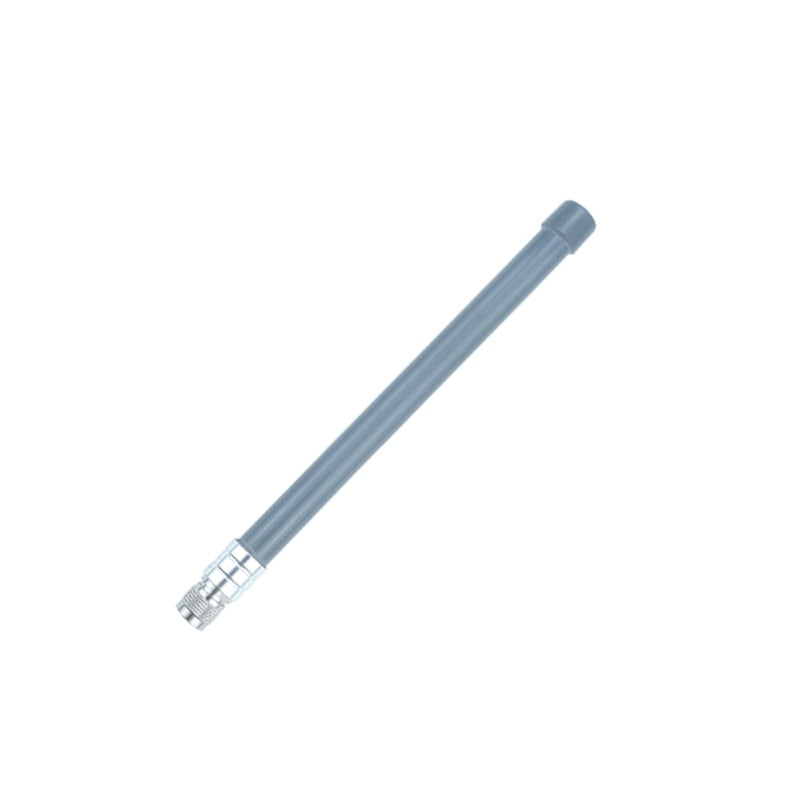
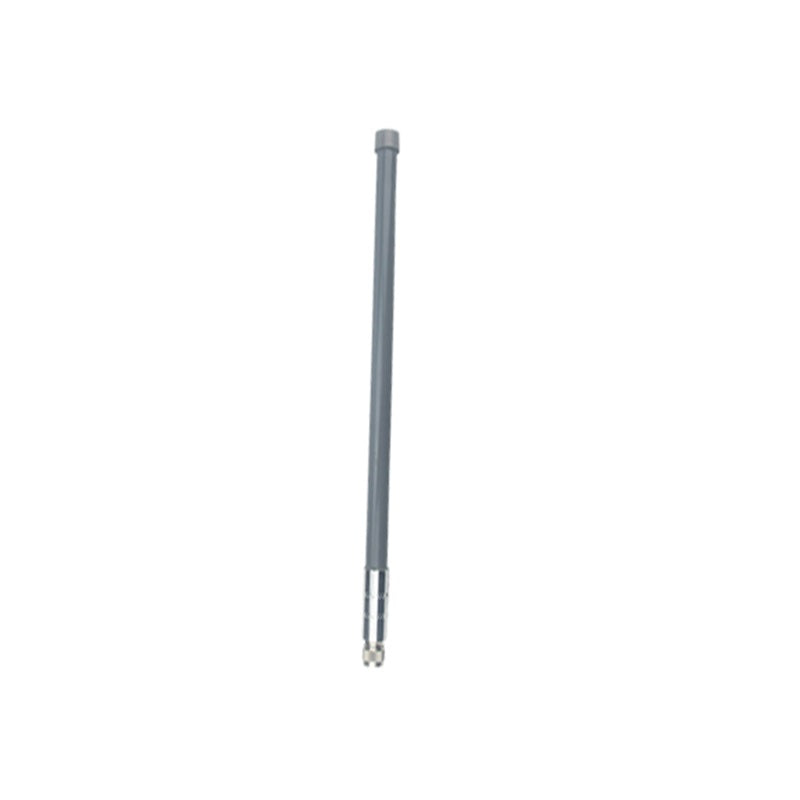
The CDSENET TX915-BLG Series is an industrial-grade, omnidirectional fiberglass antenna engineered for the 880–955 MHz band — purpose-built for LoRa, LoRaWAN, and sub-GHz IoT networks. Available in three gain configurations — 3.0 dBi (260 mm / TX915-BLG-26), 5.5 dBi (400 mm / TX915-BLG-40), and 9.0 dBi (850 mm / TX915-BLG-85) — each variant targets a distinct deployment topology: urban multipath, suburban mixed-coverage, or long-range flat-terrain respectively.
Unlike compact rubber-duck antennas, the TX915-BLG fiberglass radome provides full IP67-equivalent weatherproofing, UV resistance, and structural rigidity for permanent outdoor mast mounting. The N-Type Male (N-J) connector ensures low-loss, vibration-resistant integration with LoRaWAN gateways, Helium miners, and industrial wireless terminals. VSWR is ≤1.5 on the -40 and -85 variants, confirming efficient power transfer with minimal reflected energy at 915 MHz.

Series Specification Comparison
Select the optimal TX915-BLG variant based on your network topology and coverage requirements:
| Parameter | TX915-BLG-26 | TX915-BLG-40 | TX915-BLG-85 |
|---|---|---|---|
| Operating Frequency | 915 MHz | 880–955 MHz | 880–950 MHz |
| Peak Gain | 3.0 dBi | 5.5 dBi | 9.0 dBi |
| VSWR | ≤ 2.0 | ≤ 1.5 | ≤ 1.5 |
| Impedance | 50 Ω | 50 Ω | 50 Ω |
| Antenna Length | ~260 mm | ~400 mm | ~850 mm |
| Weight | 120 g ±5 g | 145 g ±5 g | 262 g ±5 g |
| Connector | N-Type Male (N-J) | ||
| Radome Material | Fiberglass (UV-resistant) | ||
| Mounting | Mast / pole mount (hardware included) | ||
| Certification | CE / RoHS | ||
| Barcode | 6938697488600 | 6938697488617 | 6938697488624 |
Updated: April 2026
Product Details
① Gain-Optimized Radiation Pattern by Variant
The 3.0 dBi TX915-BLG-26 (260 mm) radiates a near-spherical pattern — ideal for dense urban deployments where nodes exist at varied elevations. The 9.0 dBi TX915-BLG-85 (850 mm) compresses the beam into a narrow horizontal plane, extending range across flat terrain such as farmland or industrial parks by concentrating RF energy at the horizon. The 5.5 dBi TX915-BLG-40 (400 mm) balances both, suited for suburban mixed-topology networks.

② Industrial-Grade Weatherproof Fiberglass Radome
The sealed fiberglass radome withstands continuous outdoor exposure: UV radiation, rain, wind loads, and temperature cycling from −40 °C to +85 °C. The N-Type Male connector is corrosion-resistant and rated for repeated mating cycles, maintaining contact integrity in high-humidity field environments. This construction makes the TX915-BLG suitable for permanent infrastructure deployments without additional weatherproofing.

Professional Test Report
All TX915-BLG antennas are characterized using a vector network analyzer (Agilent/Keysight E5071C or equivalent) in a calibrated RF test environment. Key measured parameters at 915 MHz:
- TX915-BLG-26: VSWR ≤ 2.0 across 900–930 MHz; return loss ≥ 9.5 dB
- TX915-BLG-40: VSWR ≤ 1.5 across 880–955 MHz; return loss ≥ 14 dB
- TX915-BLG-85: VSWR ≤ 1.5 across 880–950 MHz; return loss ≥ 14 dB
Gain measurements are performed in a far-field anechoic chamber referenced to a calibrated isotropic source. All units comply with CE and RoHS directives.
Ideal Applications
🌐 LoRaWAN Infrastructure
LoRa gateways, ChirpStack / TTN network servers, Helium HNT miners requiring outdoor high-gain 915 MHz antennas for maximum coverage radius.
🏭 Industrial IoT
Wireless terminal equipment, AMR (Automated Meter Reading), SCADA telemetry, and industrial sensor networks operating in the 915 MHz ISM band.
🌾 Smart Agriculture
Remote soil moisture, weather station, and irrigation control nodes deployed across large flat fields — the 9 dBi variant extends range beyond 10 km LOS.
🏙️ Smart City / AMI
Advanced Metering Infrastructure, environmental monitoring stations, and municipal IoT sensor grids requiring weatherproof, maintenance-free antenna installations.

Frequently Asked Questions
1. How do I connect the CDSENET TX915-BLG antenna to Ebyte LoRa modules?
The CDSENET TX915-BLG series comes standard with an N-J (N-Type Male) connector. Most Ebyte (cdebyte.com) serial wireless modules (such as the E22 or E32 series) feature an SMA or IPEX interface. To integrate them seamlessly, you will need an N-Female to SMA-Male pigtail RF cable (such as RG58 or LMR200). This ensures minimal signal loss between your Ebyte development board and the CDSENET outdoor antenna.
2. Can I use this antenna for a Raspberry Pi-based LoRaWAN Gateway or Helium Miner?
Absolutely. These antennas are highly recommended for DIY IoT gateways built with a Raspberry Pi and a LoRa concentrator HAT (e.g., SX1302 setups). When mounting the CDSENET fiberglass antenna outdoors on a mast, ensure you use a high-quality, ultra-low-loss coaxial cable (like LMR400) to connect to your indoor Raspberry Pi enclosure to prevent attenuation of the 915MHz signal.
3. Do I need to update my GitHub deployment configurations when switching between the 3dBi, 5.5dBi, and 9dBi SKUs?
Yes. If you are deploying open-source LoRaWAN network servers from GitHub (like ChirpStack) or updating a Helium miner's assert location parameters, you must accurately input the specific antenna gain (3.0, 5.5, or 9.0 dBi) and your estimated cable loss. This allows the software stack to calculate the correct TX power, ensuring compliance with local EIRP (Effective Isotropic Radiated Power) regulations and optimizing your network mapping.
4. How should I choose between the 26cm, 40cm, and 85cm CDSENET antennas for my specific IoT project?
Selection depends heavily on your deployment topology. The 3dBi (26cm) antenna has a wider, more spherical signal pattern, making it ideal for urban environments with tall buildings or varied elevations. The 9dBi (85cm) flattens the RF signal into a tight "pancake" shape, perfect for pushing the signal extremely long distances across flat, open plains or farmland. The 5.5dBi (40cm) offers a balanced, versatile coverage pattern for mixed suburban areas.