


cdsenet
10pcs 4G LTE Internal FPC Antenna 5dBi 700–2700 MHz TX4G-FPC-9914 FPC built-in antenna
10pcs 4G LTE Internal FPC Antenna 5dBi 700–2700 MHz TX4G-FPC-9914 FPC built-in antenna
100 in stock
Couldn't load pickup availability
SKU:10-TX4G-FPC-9914

Product Overview
Updated March 2026
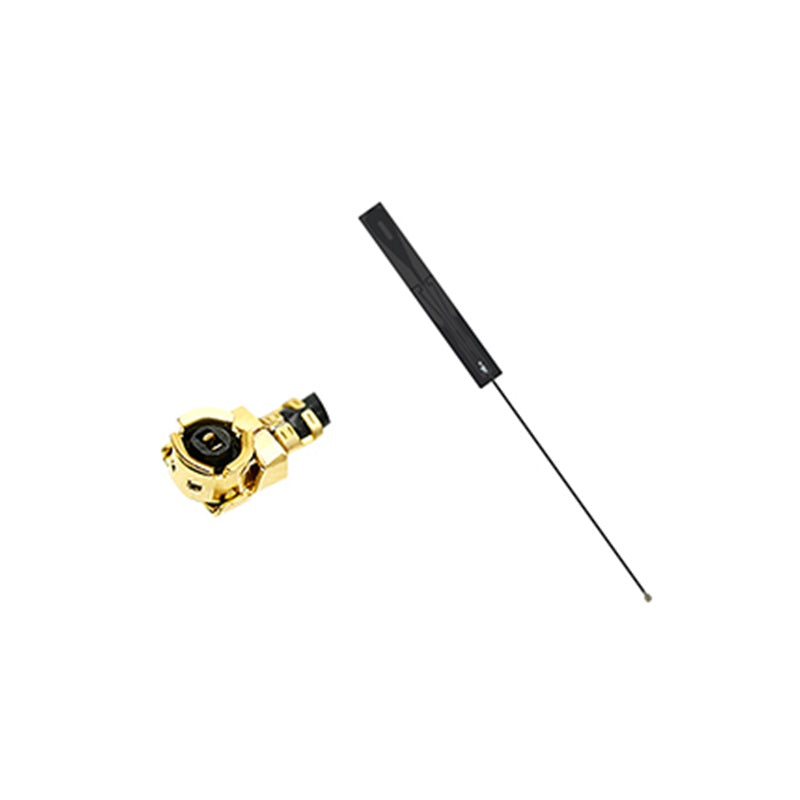
The Cdsenet TX4G-FPC-9914 is a professional-grade internal FPC (Flexible Printed Circuit) antenna engineered for 4G LTE, NB-IoT, and GPRS applications. Operating across 700–2700 MHz with a measured peak gain of 5.0 dBi, it delivers reliable signal performance in compact IoT enclosures. The precision-etched FPC radiator is mounted on a high-toughness flexible substrate with 3M adhesive backing, enabling tool-free installation on any non-metallic surface. Nominal impedance is 50 Ω; connector is IPEX-I (U.FL). RoHS compliant.

Technical Specifications
| Parameter | Technical Value |
|---|---|
| Frequency Range | 700 – 2700 MHz (4G LTE / NB-IoT / GPRS) |
| Peak Gain | 5.0 dBi |
| VSWR | ≤ 2.0 (typical; measured by Agilent E5071C VNA) |
| Return Loss | ≈ −10 dB (RF energy transmission efficiency > 89%) |
| Nominal Impedance | 50 Ω |
| Polarization | Linear |
| Connector | IPEX-I (U.FL), gold-plated |
| Cable | RF1.13 coaxial, 120 mm |
| Antenna Size | 99 mm × 14 mm |
| Substrate Material | FPC (Flexible Printed Circuit) |
| Mounting | 3M adhesive backing (non-metallic surfaces only) |
| Compliance | RoHS |
| Data Updated | March 2026 |
Product Details
Ultra-Thin Flexible Radiator — Bends to Fit Any Enclosure
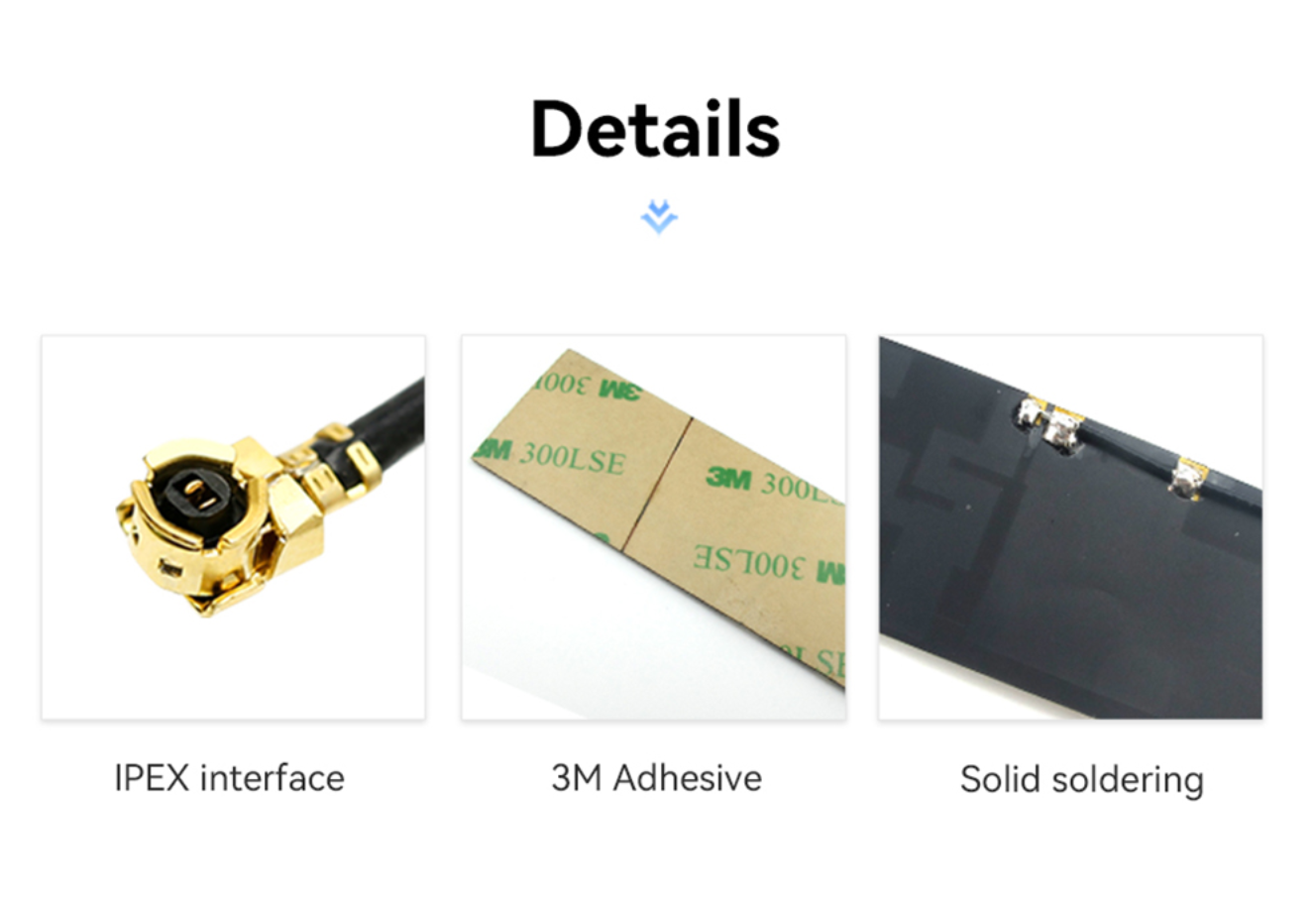
The high-toughness FPC substrate allows the antenna to conform to curved or irregular inner surfaces of non-metallic housings without performance degradation. At 99 × 14 mm and sub-millimeter thickness, it integrates into space-constrained designs where rigid PCB antennas cannot. The 3M adhesive layer provides a secure, vibration-resistant bond without screws or brackets.

Gold-Plated IPEX-I Connector with Low-Loss RF1.13 Cable
The gold-plated IPEX-I (U.FL) connector ensures a secure, corrosion-resistant mating with standard U.FL sockets on LTE/NB-IoT modules (e.g., Quectel EC21, SIM7600, BG96). The 120 mm RF1.13 coaxial cable minimises insertion loss between the antenna and the module, maintaining signal integrity across the full 700–2700 MHz band.
Professional Test Report
Measured using the Agilent E5071C Vector Network Analyzer (300 kHz – 8.5 GHz) under controlled lab conditions:
- Frequency Range: 700 MHz – 2700 MHz
- VSWR: ≤ 2.0 across the full band
- Return Loss: ≈ −10 dB — RF energy transmission efficiency > 89%, minimising signal reflection
- Peak Gain: 5.0 dBi


Ideal Applications
Smart Terminals & Handhelds
Portable 4G routers, handheld data terminals, and POS machines requiring a low-profile internal antenna with reliable LTE coverage.
Industrial IoT & Telemetry
NB-IoT smart meters, remote telemetry units (RTUs), and 4G sensor gateways in factory automation and utility monitoring.
Automotive & Fleet Tracking
In-vehicle 4G trackers and fleet management modules where space is limited and a flexible antenna can be routed along interior panels.
Agriculture & Environmental Sensors
NB-IoT / LTE-M environmental monitoring nodes, soil sensors, and weather stations deployed in remote areas with 4G coverage.
Resources
📄 Download TX4G-FPC-9914 Datasheet (PDF)FAQ
Q: Which 4G/LTE modules is the TX4G-FPC-9914 compatible with?
A: The TX4G-FPC-9914 uses a standard IPEX-I (U.FL) connector and 50 Ω impedance, making it directly compatible with most mainstream LTE and NB-IoT modules including Quectel EC21/EC25, SIM7600, BG96, and Sierra Wireless HL series. Verify that your module's U.FL socket accepts a standard IPEX-I plug before ordering. The antenna covers 700–2700 MHz, supporting LTE Bands 1–5, 7, 8, 12, 13, 17, 20, 28, and NB-IoT / GPRS fallback bands.
Q: How do I install the TX4G-FPC-9914 inside a device enclosure?
A: Peel the 3M adhesive liner and press the FPC antenna firmly onto a clean, dry, non-metallic surface (plastic, glass, or wood) inside the enclosure. Avoid mounting on or near metal components — maintain at least 5 mm clearance from any metallic part to prevent signal shielding. Route the 120 mm RF1.13 cable to the module's U.FL socket and press the IPEX-I connector straight down until it clicks. No tools are required. For curved surfaces, the FPC substrate can be gently bent to conform without cracking.
Q: What are the operating temperature and environmental limits?
A: The TX4G-FPC-9914 is rated for an operating temperature range of −40 °C to +85 °C, suitable for both indoor and outdoor-adjacent deployments. The FPC substrate and 3M adhesive are resistant to humidity and mild vibration. The product is RoHS compliant. It is not rated for direct outdoor exposure or immersion (no IP rating); for harsh outdoor environments, install inside a sealed enclosure rated IP65 or higher.
Q: Can the cable length or connector type be customised?
A: Yes. Cdsenet (Ebyte) offers OEM/ODM customisation for cable length, connector type (SMA, MMCX, MHF4, etc.), and FPC dimensions. Contact our sales team with your project specifications. Minimum order quantities apply for custom configurations. Standard stock units ship with a 120 mm RF1.13 cable and IPEX-I connector.
Q: What is the difference between VSWR ≤ 2.0 and ≤ 1.5, and does it matter for my application?
A: VSWR (Voltage Standing Wave Ratio) measures impedance mismatch between the antenna and the transmission line. A VSWR of ≤ 2.0 corresponds to a return loss of ≈ −10 dB and an RF energy transmission efficiency of > 89% — acceptable for most commercial IoT and LTE applications. A VSWR of ≤ 1.5 (return loss ≈ −14 dB, efficiency > 96%) is preferred for high-power or mission-critical RF links. For standard 4G data modems and NB-IoT sensors, ≤ 2.0 is sufficient and cost-effective.