


cdsenet
10PCS Cdsenet TX433-FPC-5711 433MHz FPC Internal Antenna 2.5dBi IPX IoT Lightweight
10PCS Cdsenet TX433-FPC-5711 433MHz FPC Internal Antenna 2.5dBi IPX IoT Lightweight
1000 in stock
Couldn't load pickup availability
SKU:10*TX433-FPC-5711


Product Overview
The TX433-FPC-5711 is a 433MHz FPC (Flexible Printed Circuit) internal antenna engineered for compact IoT wireless terminals. It delivers a measured peak gain of 2.5 dBi and a typical VSWR of 1.21 at 433MHz, covering the 423–443MHz sub-1GHz band. The ultra-slim 57 × 10.5mm form factor with a 168mm IPX-I feeder cable enables seamless integration into space-constrained enclosures for LoRa, FSK, and OOK-based devices. Updated March 2026.

Technical Specifications
| Parameter | Value |
|---|---|
| Frequency Range | 423 – 443 MHz (Center: 433 MHz) |
| Peak Gain | 2.5 dBi |
| VSWR | ≤ 1.5 (Typ. 1.21 @ 433 MHz) |
| Impedance | 50 Ω |
| Connector Type | IPX-I (IPEX Gen 1 / U.FL compatible) |
| Cable Length | 168 mm |
| Antenna Dimensions | 57 × 10.5 mm |
| Radiator Material | FPC (Flexible Printed Circuit) |
| Max Input Power | 50 W |
| Operating Temperature | -40 °C to +85 °C |
| Compliance | RoHS |
| Last Updated | March 2026 |
Product Details
Flexible FPC Radiator — Bend-to-Fit Design
The FPC substrate allows the antenna to conform to curved or irregular inner surfaces of non-metallic enclosures. A 3M adhesive backing enables tool-free mounting, reducing assembly time in high-volume production. The flexible body withstands repeated bending without degrading RF performance.

IPX-I Connector with 168mm Feeder Cable
The standard IPX-I (U.FL-compatible) connector mates directly with Ebyte E32, E22, and third-party 433MHz LoRa/FSK modules. The 168mm low-loss coaxial feeder provides routing flexibility inside enclosures while maintaining signal integrity at sub-1GHz frequencies.

Professional Test Report
Measured with a vector network analyzer (Agilent E5071C equivalent): VSWR = 1.21 @ 433 MHz, confirming ≤1.5 across the full 423–443 MHz operating band. Return loss ≥ 18 dB at center frequency.

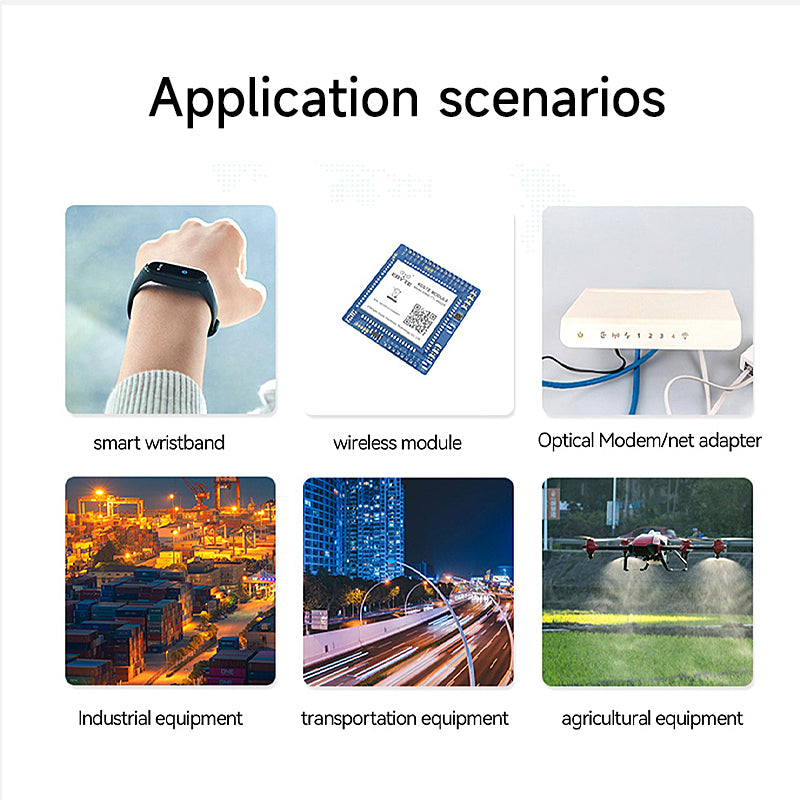
Ideal Applications
Industrial IoT & Telemetry
Long-range data acquisition nodes, pipeline monitoring, and factory automation using 433MHz LoRa or FSK modules.
Smart Home & Security
Wireless alarm panels, remote keyless entry, smart meters, and 433MHz RF remote control receivers.
Agricultural Sensors
Soil moisture, temperature, and environmental monitoring nodes deployed across wide field areas.
Asset Tracking
Fleet management, logistics container tracking, and warehouse inventory systems requiring sub-1GHz penetration.
Resources
📄 Download Datasheet (PDF)Frequently Asked Questions
Q: Is the TX433-FPC-5711 compatible with LoRa modules such as Ebyte E32-433T20D?
A: Yes. The TX433-FPC-5711 uses a standard IPX-I (U.FL) connector and is electrically matched to 50Ω systems operating at 433MHz. It is directly compatible with Ebyte E32, E22-400, and any third-party LoRa, FSK, or OOK module with an IPX-I socket in the 423–443MHz band. Verify your module's connector generation before ordering.
Q: Can this antenna be installed inside a metal enclosure?
A: No. Placing any FPC or PCB antenna inside a metallic housing will cause severe signal attenuation and VSWR degradation due to RF shielding. The TX433-FPC-5711 must be mounted on the inner surface of a non-metallic (ABS, PC, or TPEE) enclosure. Maintain a minimum clearance of 5mm from any metal component to preserve the rated 2.5 dBi gain.
Q: What is the operating temperature range and environmental durability?
A: The TX433-FPC-5711 is rated for -40°C to +85°C, covering industrial and outdoor deployment scenarios. The FPC substrate is RoHS-compliant and resistant to humidity under standard operating conditions. For harsh outdoor environments, ensure the host enclosure provides adequate IP-rated sealing; the antenna itself is not independently IP-rated.
Q: How do I mount the antenna inside my device?
A: Peel the 3M adhesive backing and press the FPC flat against the inner wall of a non-metallic enclosure. Route the 168mm coaxial feeder to your module's IPX-I socket and press-fit the connector until it clicks. Avoid sharp bends in the feeder cable with a radius under 5mm. No soldering is required. For production lines, a pick-and-place compatible variant is available on request.
Q: What is the difference between IPX-I and IPX-4 connectors?
A: IPX (IPEX) connectors are generational standards. IPX-I (Generation 1) is the most common U.FL-style micro coaxial connector used in IoT modules and is what the TX433-FPC-5711 uses. IPX-4 (MHF4) is a smaller, higher-frequency variant used in Wi-Fi 5/6 and 5G modules. They are not interchangeable. Always confirm your module's connector generation before purchasing.