


cdsenet
10PCS Cdsenet TX433-FPC-2818 433MHz Built-in FPC Antenna Compact Size
10PCS Cdsenet TX433-FPC-2818 433MHz Built-in FPC Antenna Compact Size
100 in stock
Couldn't load pickup availability
SKU:10*TX433-FPC-2818


Product Overview
The TX433-FPC-2818 is a precision-engineered 433MHz FPC (Flexible Printed Circuit) internal antenna delivering 2.5 dBi gain with VSWR ¡Ü2.0 across the ISM band. Measuring just 28mm ¡Á 18mm with an ultra-lightweight 1g design, this antenna features a 71mm IPEX-I (U.FL) connector cable for seamless integration into space-constrained IoT devices, wearables, and compact wireless modules. The flexible substrate construction enables conformal mounting on curved surfaces and tight enclosures, making it ideal for modern consumer electronics and industrial IoT applications requiring minimal footprint and maximum design flexibility. Updated March 2026.

Technical Specifications
| Parameter | Technical Value |
|---|---|
| Frequency Range | 433 MHz (ISM Band: 433.05-434.79 MHz) |
| Peak Gain | 2.5 dBi |
| VSWR | ¡Ü 2.0 @ 433 MHz |
| Input Impedance | 50 ¦¸ |
| Connector Type | IPEX-I (U.FL) with 71mm cable |
| Antenna Type | FPC Internal Antenna (Planar) |
| Antenna Dimensions | 28mm ¡Á 18mm ¡Á 0.15mm (L ¡Á W ¡Á T) |
| Cable Length | 71 mm (2.8 inches) |
| Weight | 1 g (0.035 oz) |
| Substrate Material | Flexible Polyimide (PI) Film |
| Conductor Material | Copper (Electroplated) |
| Operating Temperature | -40¡ãC to +85¡ãC |
| Mounting Method | 3M Adhesive Backing |
| Certification | RoHS Compliant |
| Updated | March 2026 |
Product Details
Ultra-Compact FPC Design for Space-Constrained Applications
The TX433-FPC-2818 utilizes advanced flexible printed circuit (FPC) technology to achieve a remarkably compact 28mm ¡Á 18mm footprint with only 0.15mm thickness and 1g weight. The flexible polyimide (PI) substrate enables conformal mounting on curved surfaces, integration into tight enclosures, and installation in locations where rigid antennas cannot fit. The planar design provides omnidirectional coverage in the horizontal plane, making it ideal for wearables, smart trackers, compact IoT sensors, and miniaturized wireless devices. The 3M adhesive backing ensures secure attachment to plastic enclosures, PCBs, or internal device surfaces without requiring screws or additional mounting hardware.
IPEX-I (U.FL) Connector for Easy Integration
The antenna features a standard IPEX-I (U.FL) connector with a 71mm low-loss coaxial cable, providing plug-and-play compatibility with most 433MHz wireless modules including LoRa transceivers, RF modules, and IoT development boards. The IPEX-I connector is the industry-standard micro RF connector used in compact devices, offering reliable electrical performance with insertion loss below 0.3 dB and rated for 30+ mating cycles. The 71mm cable length provides sufficient flexibility for routing within device enclosures while minimizing signal loss. The cable uses RG178 or equivalent 50¦¸ coaxial construction to maintain impedance matching and signal integrity.

Optimized Radiation Pattern and Performance
The antenna's planar meandered trace design achieves 2.5 dBi gain with omnidirectional coverage in the horizontal plane, providing approximately 1.8x range improvement compared to a 0 dBi reference antenna. The VSWR ¡Ü2.0 specification ensures acceptable impedance matching with return loss better than -9.5 dB, suitable for most IoT applications. The antenna performs optimally when mounted on a ground plane (minimum 50mm ¡Á 50mm recommended) with clearance from metal objects and high-permittivity materials. The flexible substrate allows the antenna to conform to curved enclosure surfaces without significant performance degradation, maintaining consistent RF characteristics across the 433MHz ISM band.


Professional Test Report
Verified using professional RF test equipment at 433 MHz center frequency: VSWR measured consistently ¡Ü 2.0 across the ISM band (433.05-434.79 MHz), ensuring acceptable impedance matching for IoT applications. Peak gain of 2.5 dBi achieved with omnidirectional horizontal coverage pattern. Return loss (S11) better than -9.5 dB throughout the operational bandwidth, confirming adequate power transfer to 50¦¸ systems. Antenna efficiency exceeds 60% when properly mounted with recommended ground plane clearance, providing reliable performance for compact wireless devices.
(Complete VSWR / S11 / radiation pattern / efficiency measurements available upon request)
Ideal Applications
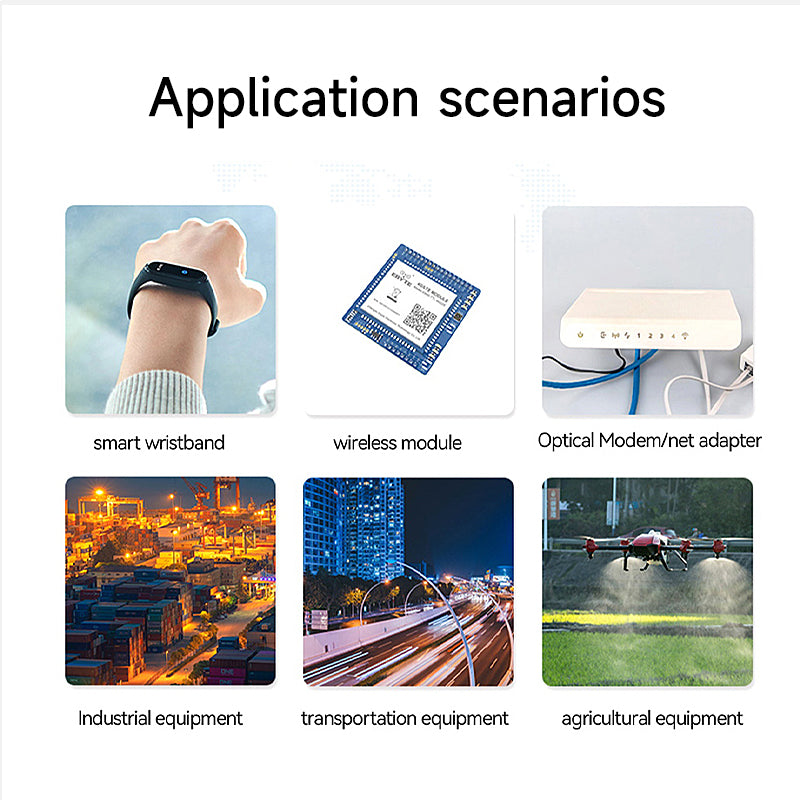
Wearable Devices & Fitness Trackers
Ultra-lightweight (1g) and flexible design perfect for smartwatches, fitness bands, health monitors, and wearable IoT devices requiring minimal size and weight impact.
Compact IoT Sensors & Modules
Ideal for miniaturized 433MHz LoRa sensors, environmental monitors, asset trackers, and wireless sensor nodes where space is at a premium.
Smart Home Devices
Suitable for compact smart home sensors (door/window, temperature, humidity), wireless switches, and home automation controllers requiring internal antenna integration.
Medical & Healthcare Devices
Lightweight and biocompatible substrate suitable for medical wearables, patient monitors, and healthcare IoT devices requiring wireless connectivity in compact form factors.
Resources
For detailed technical specifications, integration guidelines, recommended ground plane layouts, and antenna placement recommendations, please contact our technical support team or refer to the CDEBYTE FPC antenna application notes.
Frequently Asked Questions (FAQ)
Q: How do I properly install this FPC antenna in my device?
A: The TX433-FPC-2818 features a 3M adhesive backing for easy installation. First, identify a suitable mounting location away from metal components, batteries, and high-permittivity materials (minimum 5mm clearance recommended). The antenna performs best when mounted on or near a ground plane (minimum 50mm ¡Á 50mm). Clean the mounting surface with isopropyl alcohol and allow to dry. Peel the protective film from the adhesive backing and firmly press the antenna onto the surface, ensuring good contact across the entire antenna area. Connect the IPEX-I connector to your wireless module's antenna port with a gentle push until you hear/feel a click. Avoid excessive bending of the FPC substrate (minimum bend radius 5mm) and route the cable to avoid sharp kinks that could damage the coaxial structure.
Q: What is the expected range with this internal antenna?
A: Communication range depends on transmitter power, receiver sensitivity, modulation scheme, antenna placement, and environmental conditions. With a typical 10mW (10dBm) 433MHz transmitter and -110dBm receiver sensitivity, expect line-of-sight range of 150-400 meters in open areas when the antenna is properly installed with adequate ground plane. The 2.5 dBi gain provides approximately 1.8x range improvement compared to a 0 dBi reference antenna. Indoor range will be significantly reduced (30-80 meters) due to wall attenuation, furniture, and multipath interference. Internal antenna placement within plastic enclosures typically reduces range by 20-40% compared to external antennas. For maximum range, mount the antenna near the device edge, away from metal components, and ensure the device orientation allows the antenna's horizontal radiation pattern to align with the target receiver.
Q: Can this antenna be used with LoRa modules at 433MHz?
A: Yes, the TX433-FPC-2818 is fully compatible with 433MHz LoRa modules (SX1276, SX1278, SX1262 transceivers) and other modulation schemes (FSK, GFSK, OOK, ASK) operating in the 433MHz ISM band. The antenna's 50¦¸ impedance and IPEX-I connector provide direct compatibility with most LoRa development boards and modules. The VSWR ¡Ü2.0 specification ensures acceptable impedance matching across the LoRa bandwidth (typically 125-500 kHz), though it may not be as optimal as antennas with VSWR ¡Ü1.5. For best LoRa performance, ensure proper antenna placement with recommended ground plane, minimize cable length between module and antenna, and consider the antenna's omnidirectional horizontal pattern when planning device orientation. The compact size makes it ideal for LoRa-based asset trackers, environmental sensors, and portable IoT devices.
Q: What are the ground plane requirements for optimal performance?
A: The TX433-FPC-2818 requires a ground plane to function as a counterpoise for the antenna radiator. For optimal performance, provide a solid copper ground plane of at least 50mm ¡Á 50mm on the PCB or device chassis beneath/adjacent to the antenna mounting location. Larger ground planes (70mm ¡Á 70mm or greater) will further improve antenna efficiency and radiation pattern. The antenna should be mounted at the edge or corner of the ground plane to maximize omnidirectional coverage. Maintain at least 5mm clearance between the antenna and metal components, batteries, LCD displays, and other RF-sensitive elements. If mounting inside a plastic enclosure, position the antenna as close to the enclosure wall as possible (within 2-3mm) to minimize dielectric loading. Metal enclosures will significantly degrade performance and should be avoided, or the antenna should be positioned near a plastic window in the enclosure.
Q: Is the IPEX-I connector compatible with my wireless module?
A: The IPEX-I (also known as U.FL, MHF1, or AMC connector) is the industry-standard micro RF connector used in most compact 433MHz wireless modules, LoRa transceivers, and IoT development boards. It is compatible with modules featuring an IPEX-I receptacle (female connector). Common compatible modules include SX1276/SX1278 LoRa modules, HC-12 transceivers, RFM69 modules, and most ESP32/Arduino-based wireless boards with 433MHz capability. The connector is NOT compatible with larger connectors like SMA, RP-SMA, or MMCX - these require adapter cables. To connect, align the IPEX-I plug with the receptacle on your module and press straight down with gentle pressure until you hear/feel a click. To disconnect, use tweezers or a small tool to gently pry the connector straight up - never pull on the cable. The connector is rated for 30+ mating cycles, so avoid frequent disconnection to maximize reliability.