


cdsenet
Cdsenet TX2400-JZ-5 2.4GHz WiFi Antenna 2.5dBi SMA-J TPEE 50mm Rubber Rod Antenna
Cdsenet TX2400-JZ-5 2.4GHz WiFi Antenna 2.5dBi SMA-J TPEE 50mm Rubber Rod Antenna
100 in stock
Couldn't load pickup availability
SKU:TX2400-JZ-5


Product Overview
The TX2400-JZ-5 is a 2.4GHz omnidirectional rod antenna with a TPEE radome, engineered for compact wireless devices requiring a robust, low-profile external antenna. It delivers a measured peak gain of 2.5 dBi and a typical VSWR of 1.17 at 2.45GHz, covering the full 2.4–2.5GHz ISM band. The 50 × 10mm cylindrical form factor — shorter and wider than slim-profile alternatives — provides a more rigid, impact-resistant antenna body suited for industrial IoT terminals, WLAN modules, and smart home devices. The gold-plated SMA-J connector ensures low-loss, oxidation-resistant signal transfer. Updated March 2026.

Technical Specifications
| Parameter | Value |
|---|---|
| Frequency Range | 2.4 – 2.5 GHz (WiFi 802.11b/g/n, Bluetooth, ZigBee, ISM) |
| Peak Gain | 2.5 dBi |
| VSWR | ≤ 1.5 (Typ. 1.17 @ 2.45 GHz) |
| Impedance | 50 Ω |
| Connector Type | SMA-J (SMA Male, gold-plated pin) |
| Antenna Dimensions | 50 mm (length) × 10 mm (diameter) |
| Radome Material | TPEE (black, weather-resistant) |
| Radiator Material | Copper |
| Radiation Pattern | Omnidirectional (vertical polarization) |
| Max Input Power | 50 W |
| Operating Temperature | -30 °C to +75 °C |
| Compliance | RoHS |
| Last Updated | March 2026 |
Product Details
50 × 10mm Rigid Rod Body — Impact-Resistant for Industrial Environments
The 50 × 10mm cylindrical TPEE rod body is more rigid and impact-resistant than slim-profile alternatives such as the TX2400-JW-3 (29mm, thin-wall). The 10mm diameter provides a larger cross-section that resists bending under lateral impact, making it suitable for industrial terminals, handheld devices, and equipment subject to mechanical stress. Despite the compact 50mm length, the copper radiator achieves 2.5 dBi gain with VSWR 1.17 at 2.45GHz — equivalent to the TX2400-JW-3 in electrical performance while offering greater mechanical robustness.

Gold-Plated SMA-J Connector — Oxidation-Resistant for Long-Term Reliability
The gold-plated SMA-J (male, inner pin) connector provides a corrosion-resistant, low-loss 50Ω interface to SMA-K female ports on 2.4GHz wireless modules, IoT gateways, and industrial terminals. Gold plating on the contact surfaces minimizes contact resistance and prevents oxidation over repeated mating cycles and in humid environments. The connector is rated for 50W maximum input power, accommodating the full output range of 2.4GHz wireless equipment from low-power IoT modules to higher-power access points.
Professional Test Report
Measured with a vector network analyzer (Agilent E5071C equivalent): VSWR = 1.17 @ 2.45 GHz, confirming ≤1.5 across the full 2.4–2.5 GHz operating band. Return loss ≈ 22 dB at the measured frequency point.


Ideal Applications
Compact WiFi Modules & WLAN Devices
Compact WiFi routers, access points, and WLAN modules with SMA-K ports where the 50mm rod profile provides a more rigid antenna body than slim alternatives in the same height class.
ZigBee Gateways & Smart Home
ZigBee coordinators, smart home control panels, and Bluetooth gateways requiring a compact, robust 2.4GHz external antenna with SMA-K interface and reliable impedance matching.
Industrial IoT Terminals
Industrial sensor nodes, handheld data collectors, and wireless terminals where the 10mm diameter rod body provides greater mechanical resistance to lateral impact than thin-profile antennas.
Agricultural & Environmental Monitoring
WiFi or ZigBee-connected environmental sensors for smart agriculture and outdoor IoT nodes where the TPEE housing provides weather resistance within the -30°C to +75°C operating range.
Resources
📄 Download Datasheet (PDF)Frequently Asked Questions
Q: What is the difference between the TX2400-JZ-5 and TX2400-JW-3?
A: Both antennas deliver 2.5 dBi gain with VSWR 1.17 at 2.45GHz and use SMA-J connectors for 2.4GHz applications. The key difference is form factor: the TX2400-JZ-5 (50 × 10mm) has a wider, more rigid cylindrical body suited for industrial environments with mechanical impact risk. The TX2400-JW-3 (29mm, thin-wall) is shorter and lighter (2g) for the most compact installations. Choose JZ-5 for mechanical robustness; choose JW-3 for minimum height clearance.
Q: Is the TX2400-JZ-5 compatible with RP-SMA ports on consumer WiFi routers?
A: No. The TX2400-JZ-5 uses an SMA-J (standard SMA male) connector, which is not compatible with RP-SMA (Reverse Polarity SMA) ports commonly found on consumer WiFi routers. Confirm your device has an SMA-K (standard SMA female) port before ordering. For RP-SMA router ports, use an RP-SMA male antenna or an SMA-to-RP-SMA adapter.
Q: What is the operating temperature range and how does it compare to other CDSENET 2.4GHz antennas?
A: The TX2400-JZ-5 is rated for -30°C to +75°C. This is a narrower range than the TX2400-JK-11 and TX2400-JW-3 (both rated -40°C to +85°C). For applications requiring operation below -30°C or above +75°C — such as outdoor industrial deployments in extreme climates — use the TX2400-JK-11 or TX2400-JW-3 instead. The JZ-5 is suitable for standard indoor industrial and commercial environments within its rated range.
Q: Which 2.4GHz protocols does the TX2400-JZ-5 support?
A: The 2.4–2.5GHz frequency range covers WiFi 802.11b/g/n (2.412–2.484GHz), Bluetooth Classic and BLE 5.x (2.402–2.480GHz), ZigBee 3.0 (2.405–2.480GHz), Thread, Matter, and proprietary 2.4GHz FSK/GFSK protocols. It is compatible with any 2.4GHz device featuring an SMA-K (standard SMA female) antenna port.
Q: Does antenna orientation affect performance?
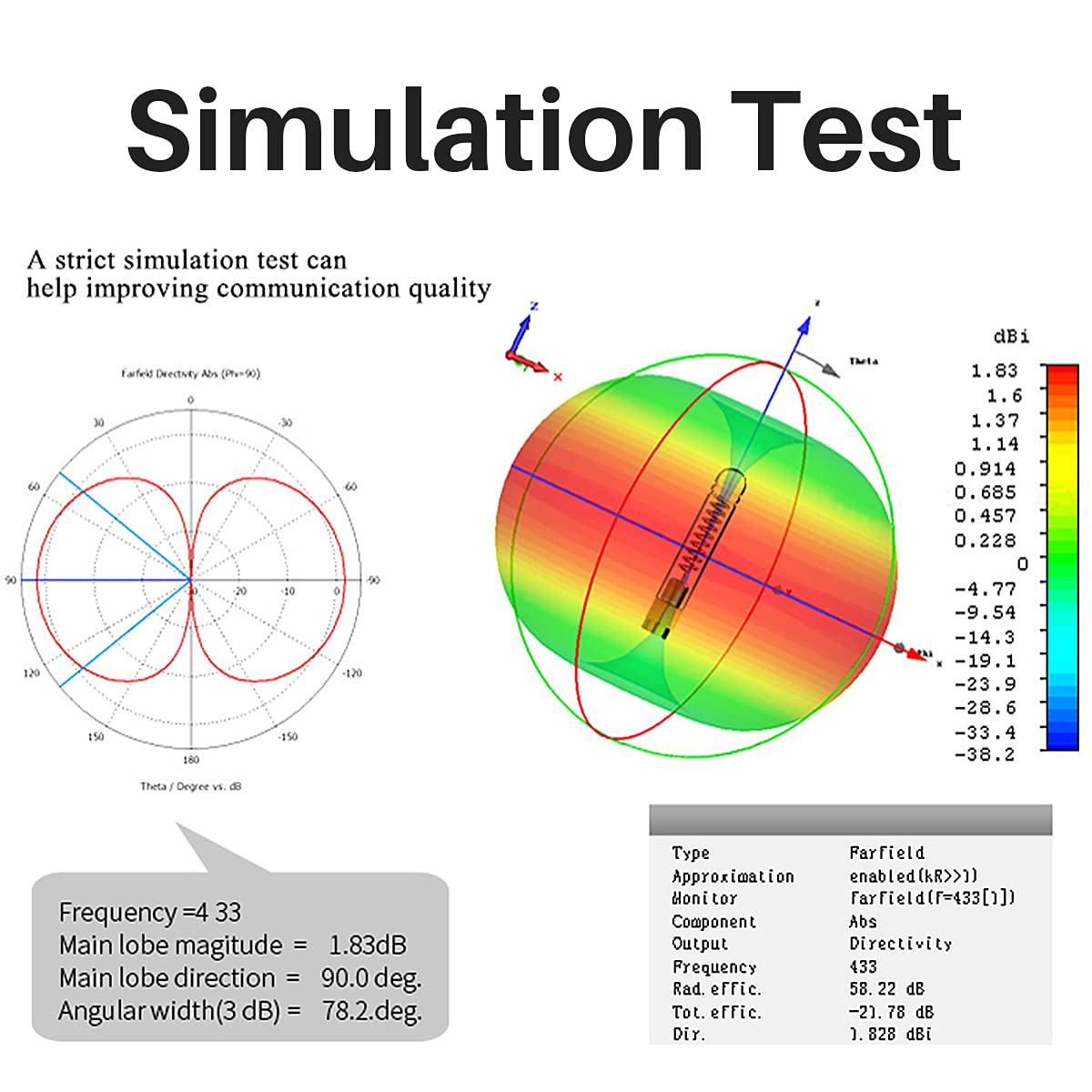
A: Yes. As a vertically polarized omnidirectional antenna, the TX2400-JZ-5 radiates most effectively in the horizontal plane perpendicular to the antenna rod. Mounting the antenna vertically maximizes horizontal coverage. Avoid pointing the antenna tip directly at the receiving station, as the radiation pattern has a null at the tip (along the antenna axis). The rigid 10mm diameter body maintains a stable vertical orientation without bending under its own weight.