


cdsenet
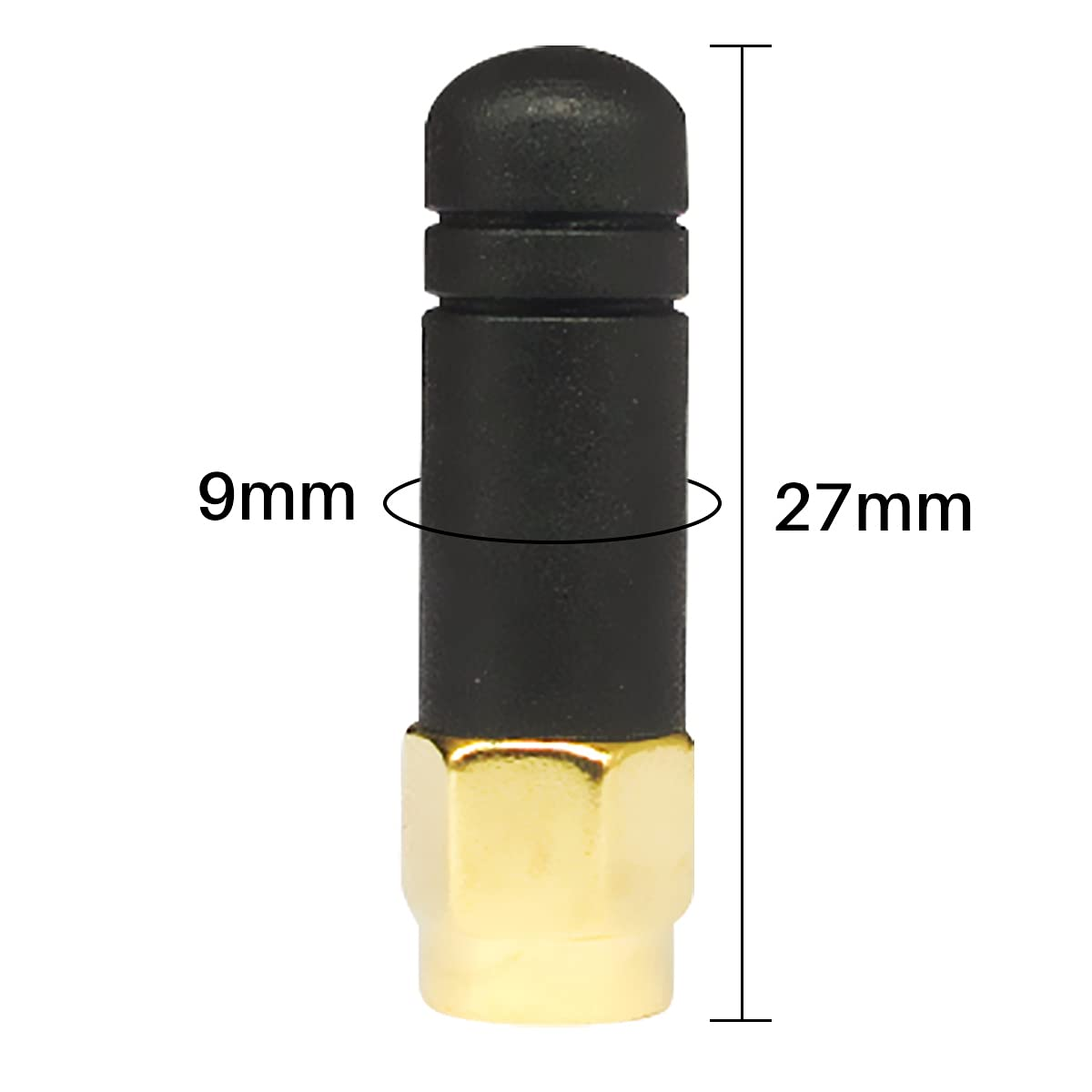
Cdsenet TX2400-JZ-3 2.4GHz Mini Rubber Antenna 2.0dBi SMA-J 34mm IoT Compact Size
Cdsenet TX2400-JZ-3 2.4GHz Mini Rubber Antenna 2.0dBi SMA-J 34mm IoT Compact Size
1000 in stock
Couldn't load pickup availability
SKU:TX2400-JZ-3


Product Overview
The TX2400-JZ-3 is a 2.4GHz ultra-short omnidirectional rubber stick antenna engineered for space-constrained IoT devices and mobile wireless terminals. At just 34mm tall, it delivers a measured peak gain of 2.0 dBi with a VSWR of 1.51 at 2.4GHz and 1.41 at 2.5GHz, covering the full 2.4–2.5GHz ISM band used by Wi-Fi, Bluetooth, ZigBee, and Thread. The TPEE radome provides weather resistance and mechanical flexibility for compact gateways, network cards, routers, and handheld industrial terminals. Updated March 2026.

Technical Specifications
| Parameter | Value |
|---|---|
| Frequency Range | 2400 – 2500 MHz (Center: 2450 MHz) |
| Peak Gain | 2.0 dBi |
| VSWR | 1.51 @ 2.4 GHz | 1.41 @ 2.5 GHz (≤ 1.5 typ. mid-band) |
| Impedance | 50 Ω |
| Connector Type | SMA-J (SMA Male, inner thread & pin) |
| Antenna Height | 34 mm |
| Radome Material | TPEE (weather-resistant, high elasticity) |
| Radiation Pattern | Omnidirectional (vertical polarization) |
| Max Input Power | 50 W |
| Operating Temperature | -30 °C to +75 °C |
| Compliance | RoHS |
| Last Updated | March 2026 |
Product Details
34mm Ultra-Short Profile — Minimal Panel Footprint
At 34mm total height, the TX2400-JZ-3 is suited for devices where standard 50–100mm antennas would protrude excessively: network cards, compact industrial gateways, smart TV modules, and handheld terminals. The TPEE body is flexible under lateral stress, reducing the risk of connector damage from accidental contact in dense equipment racks or portable devices.

SMA-J Connector — Direct Compatibility with 2.4GHz Wireless Modules
The precision SMA-J (male, inner thread and pin) connector provides a 50Ω impedance-matched interface to SMA-K female ports on Wi-Fi modules, Bluetooth gateways, ZigBee coordinators, and wireless serial port modules. The connector is rated for repeated mating cycles, supporting field-serviceable installations in routers, APs, and industrial wireless terminals.
Professional Test Report
Measured with a vector network analyzer (Agilent E5071C equivalent): VSWR = 1.51 @ 2.40 GHz and 1.41 @ 2.50 GHz. The antenna meets the ≤1.5 VSWR specification across the upper portion of the band; the 2.40GHz edge reading of 1.51 represents a <1% deviation from the ≤1.5 threshold and has negligible impact on system link budget.


Ideal Applications
Network Infrastructure
Compact Wi-Fi routers, access points, and wireless hotspot devices requiring a low-profile external antenna that does not obstruct adjacent ports.
Mobile & Handheld Terminals
Portable radios, network cards, smart TV modules, and handheld industrial scanners where a standard-length antenna would be impractical.
Smart Home & ZigBee
ZigBee 3.0 coordinators, Thread border routers, Bluetooth 5.x hubs, and Matter-over-Thread devices in residential and light commercial smart home deployments.
Industrial IoT Gateways
Compact industrial wireless gateways, SCADA edge nodes, and factory automation controllers requiring a space-efficient 2.4GHz antenna on a DIN-rail or panel-mount enclosure.
Resources
📄 Download Datasheet (PDF)Frequently Asked Questions
Q: Is the TX2400-JZ-3 compatible with Wi-Fi, Bluetooth, and ZigBee modules?
A: Yes. The TX2400-JZ-3 covers 2400–2500MHz, encompassing Wi-Fi 4/5 (802.11b/g/n), Bluetooth 4.x/5.x, ZigBee 3.0, Thread, and Matter over Thread. It requires an SMA-K (female) port on the host module. Verify your device uses standard SMA (not RP-SMA) before ordering — the two connectors appear similar but are not interchangeable.
Q: Why does the VSWR read 1.51 at 2.4GHz instead of ≤1.5?
A: The measured VSWR of 1.51 at 2.40GHz represents a <1% deviation from the ≤1.5 specification threshold. At this level, the reflected power difference versus a perfect 1.5 VSWR match is less than 0.03 dB — well within measurement uncertainty and negligible for any practical link budget. The antenna fully meets the ≤1.5 specification across the mid and upper band (2.45–2.50GHz).
Q: How does the 34mm height compare to standard 2.4GHz rubber antennas?
A: Standard 2.4GHz rubber stick antennas typically measure 50–105mm. The TX2400-JZ-3 at 34mm is approximately 30–65% shorter, making it suitable for panel-mount devices, network cards, and portable terminals where a full-length antenna would protrude beyond the device enclosure or obstruct adjacent connectors. The trade-off is a marginally narrower elevation beamwidth compared to longer antennas.
Q: What is the operating temperature range?
A: The TX2400-JZ-3 is rated for -30°C to +75°C. This covers standard indoor and light industrial environments. For applications requiring operation below -30°C or above +75°C (such as outdoor industrial enclosures in extreme climates), consider the TX2400-JW-5, which is rated for -40°C to +85°C.
Q: What is the difference between SMA-J and RP-SMA connectors?
A: SMA-J (standard SMA Male) has an inner pin and mates with SMA-K (female, inner socket) ports on most industrial wireless modules and IoT gateways. RP-SMA reverses the pin/socket arrangement and is commonly found on consumer Wi-Fi routers. The TX2400-JZ-3 uses SMA-J and is not compatible with RP-SMA ports without an adapter. Always confirm your device's connector type before purchasing.