


cdsenet
Cdsenet TX2400-JKD-20 2.4GHz WiFi Antenna 5.0dBi SMA-J TPEE 200mm Rubber Antenna for IoT Module
Cdsenet TX2400-JKD-20 2.4GHz WiFi Antenna 5.0dBi SMA-J TPEE 200mm Rubber Antenna for IoT Module
1000 in stock
Couldn't load pickup availability
SKU:TX2400-JKD-20


Product Overview
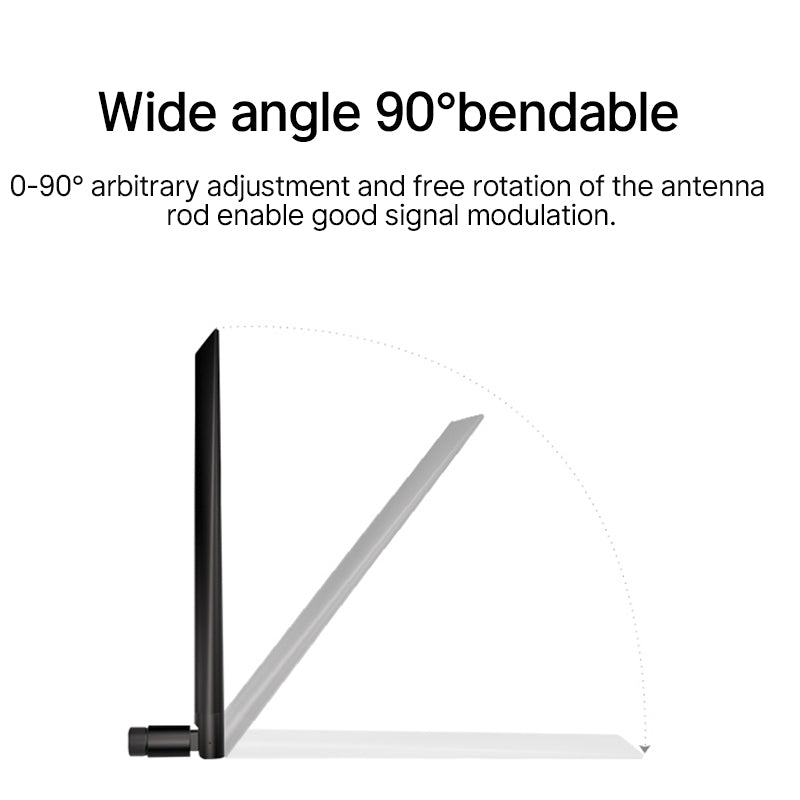
The TX2400-JKD-20 is a 2.4GHz omnidirectional rubber stick antenna with a TPEE radome, engineered for direct-mount use on WiFi routers, access points (APs), smart home gateways, and 2.4GHz IoT terminal devices. It delivers a measured peak gain of 5.0 dBi and a typical VSWR of 1.36 at 2.45GHz, covering the full 2.4–2.5GHz ISM band. The 200mm TPEE-encased antenna supports bending to various angles for flexible orientation, and the SMA-J connector provides a direct 50Ω interface to SMA-K female ports on routers, APs, and wireless modules. Updated March 2026.

Technical Specifications
| Parameter | Value |
|---|---|
| Frequency Range | 2.4 – 2.5 GHz (WiFi 802.11b/g/n, Bluetooth, ZigBee, ISM) |
| Peak Gain | 5.0 dBi |
| VSWR | ≤ 1.5 (Typ. 1.36 @ 2.45 GHz) |
| Impedance | 50 Ω |
| Connector Type | SMA-J (SMA Male, inner pin and thread) |
| Antenna Height | 200 mm |
| Radome Material | TPEE (flexible, weather-resistant) |
| Radiation Pattern | Omnidirectional (vertical polarization) |
| Max Input Power | 50 W |
| Operating Temperature | -40 °C to +85 °C |
| Compliance | RoHS |
| Last Updated | March 2026 |
Product Details
5.0 dBi High-Gain TPEE Rubber Radome — 200mm Bendable Design
The TX2400-JKD-20 achieves 5.0 dBi gain through a 200mm radiator that operates as a 5/8-wave equivalent at 2.4GHz, compressing the radiation pattern toward the horizon for increased gain compared to standard quarter-wave (2.15 dBi) or half-wave (2.5 dBi) antennas. The TPEE (Thermoplastic Polyester Elastomer) radome allows the antenna to be bent to various angles for flexible orientation in installations where a fixed vertical position is not optimal. TPEE maintains its mechanical properties across -40°C to +85°C and resists cracking under repeated flexing.

SMA-J Direct-Mount Connector — 50W Rated for Routers and APs
The precision SMA-J (male, inner pin and thread) connector provides a direct 50Ω interface to SMA-K female ports on WiFi routers, access points, smart home gateways, and 2.4GHz wireless modules. Rated for 50W maximum input power, the TX2400-JKD-20 accommodates the full output power range of consumer and industrial WiFi equipment. The connector is rated for repeated mating cycles, supporting field-replaceable antenna installations on routers and APs.
Professional Test Report
Measured with a vector network analyzer (Agilent E5071C equivalent): VSWR = 1.36 @ 2.45 GHz, confirming ≤1.5 across the full 2.4–2.5 GHz operating band. Return loss ≈ 16 dB at the measured frequency point.


Ideal Applications
WiFi Routers & Access Points
Direct-mount replacement or upgrade antenna for 2.4GHz WiFi routers, access points, and wireless bridges with SMA-K female ports, where the 5.0 dBi gain extends coverage compared to standard 2.0–3.0 dBi stock antennas.
Smart Home Gateways & Hubs
Smart home gateways, Zigbee coordinators, and home automation hubs requiring a high-gain 2.4GHz external antenna for extended mesh network coverage across larger homes.
Industrial Wireless Terminals
Industrial WiFi terminals, handheld data collectors, and 2.4GHz wireless modules in industrial enclosures where the 50W power rating and TPEE durability support demanding operating environments.
Mobile Devices & Smart TVs
Radios, aircards, smart TVs, and other 2.4GHz terminal devices with SMA-K ports requiring a bendable external antenna for flexible orientation in fixed or semi-fixed installations.
Resources
📄 Download Datasheet (PDF)Frequently Asked Questions
Q: Is the TX2400-JKD-20 compatible with all 2.4GHz WiFi routers and modules?
A: The TX2400-JKD-20 is compatible with any 2.4GHz device featuring an SMA-K (female) port, including WiFi routers, access points, smart home gateways, and wireless modules. Confirm your device has an SMA-K (female) port before ordering. SMA and RP-SMA connectors are not interchangeable — RP-SMA reverses the pin/socket arrangement and is commonly found on consumer WiFi routers. Check your router's antenna port type before purchasing.
Q: How does 5.0 dBi gain compare to standard router antennas?
A: Most consumer WiFi router stock antennas are rated at 2.0–3.0 dBi. The TX2400-JKD-20's 5.0 dBi gain provides approximately 2–3 dB more gain, which translates to roughly 58–100% more effective radiated power in the horizontal plane. This is achieved by compressing the radiation pattern toward the horizon (reducing energy radiated upward/downward), which is beneficial for single-floor deployments but less effective for multi-story coverage.
Q: Does bending the antenna affect its RF performance?
A: Yes. The VSWR specification of ≤1.5 is measured with the antenna in a straight vertical position. Bending the antenna alters the radiation pattern — a bent antenna no longer radiates in a purely omnidirectional pattern. For applications requiring consistent omnidirectional coverage, mount the antenna vertically. Use the bend capability for space-constrained installations or to redirect the radiation pattern toward a specific area.
Q: What factors affect WiFi communication distance with this antenna?
A: Key factors include: (1) physical barriers — concrete walls attenuate 2.4GHz signals by 10–15 dB per wall; (2) antenna orientation — the 5.0 dBi gain is concentrated in the horizontal plane, so vertical mounting maximizes horizontal coverage; (3) proximity to metal surfaces — metal objects within 50mm of the antenna can detune the radiator and increase VSWR; (4) interference from other 2.4GHz devices on the same channel.
Q: What is the operating temperature range and is the TPEE radome suitable for outdoor use?
A: The TX2400-JKD-20 is rated for -40°C to +85°C. The TPEE radome is weather-resistant and suitable for protected outdoor installations. For direct rain or high-humidity exposure, protect the SMA connector junction with self-amalgamating tape to prevent moisture ingress. The TPEE material provides better crack resistance than standard rubber compounds under repeated flexing and temperature cycling.