


cdsenet
10PCS TX2400-FPC3-3014 2.4GHz FPC Internal Antenna | 2.0 dBi Gain | IPEX-3 Connector Compact and Lightweight
10PCS TX2400-FPC3-3014 2.4GHz FPC Internal Antenna | 2.0 dBi Gain | IPEX-3 Connector Compact and Lightweight
995 in stock
Couldn't load pickup availability
SKU:10*TX2400-FPC3-3014



Product Overview
The TX2400-FPC3-3014 is a precision-engineered 2.4GHz FPC (Flexible Printed Circuit) internal antenna delivering 2.0 dBi gain with VSWR ¡Ü2.0 across the ISM band (2400-2500 MHz). Measuring 30mm ¡Á 14mm with 1g weight, this antenna features an IPEX-3 (MHF3) connector for seamless integration into WiFi routers, Bluetooth devices, ZigBee modules, and IoT wireless communication systems. The larger 30¡Á14mm footprint provides enhanced gain performance compared to smaller FPC antennas, making it ideal for applications requiring extended WiFi coverage, improved Bluetooth range, and reliable 2.4GHz connectivity with the latest IPEX-3 connector standard. Updated March 2026.

Technical Specifications
| Parameter | Technical Value |
|---|---|
| Frequency Range | 2400-2500 MHz (2.4GHz ISM Band) |
| Peak Gain | 2.0 dBi |
| VSWR | ¡Ü 2.0 @ 2400-2500 MHz |
| Input Impedance | 50 ¦¸ |
| Connector Type | IPEX-3 (MHF3) with coaxial cable |
| Antenna Type | FPC Internal Antenna (Planar) |
| Antenna Dimensions | 30mm ¡Á 14mm ¡Á 0.15mm (L ¡Á W ¡Á T) |
| Cable Length | 100 mm (3.94 inches, typical) |
| Weight | 1 g (0.035 oz) |
| Substrate Material | Flexible Polyimide (PI) Film |
| Conductor Material | Copper (Electroplated) |
| Operating Temperature | -40¡ãC to +85¡ãC |
| Mounting Method | 3M Adhesive Backing |
| Certification | RoHS Compliant |
| Updated | March 2026 |
Product Details
Optimized 30mm ¡Á 14mm FPC Design for Enhanced Performance
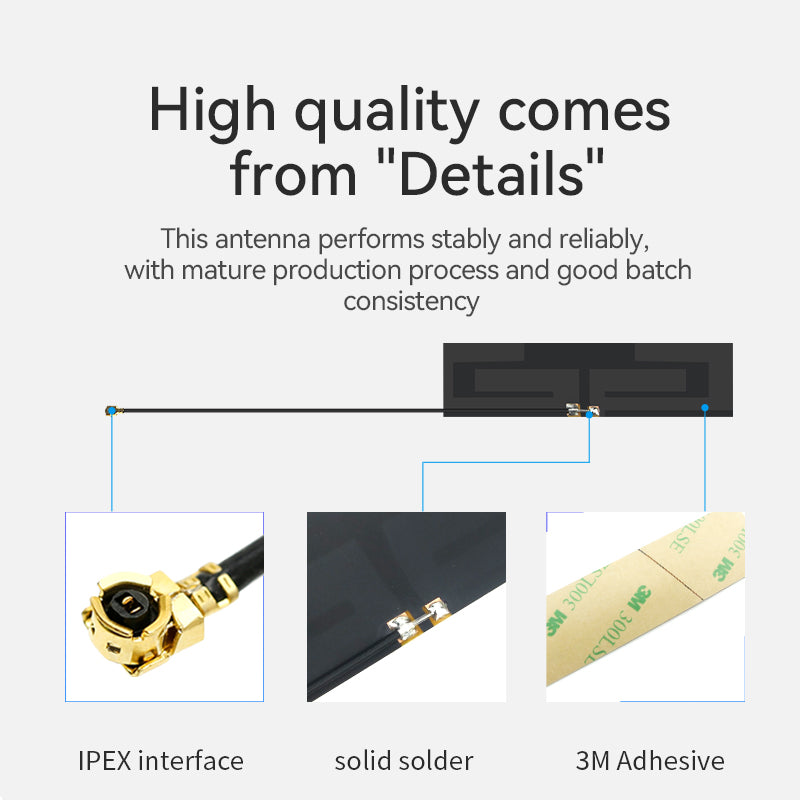
The TX2400-FPC3-3014 features a larger 30mm ¡Á 14mm footprint compared to ultra-compact alternatives, providing enhanced 2.0 dBi gain and improved radiation efficiency. The increased antenna aperture delivers approximately 20-30% better range performance compared to smaller 19¡Á8mm or 25¡Á9mm FPC antennas, making it ideal for WiFi routers, access points, and IoT gateways where maximizing coverage is critical. The flexible polyimide substrate maintains 0.15mm thickness and 1g weight while enabling conformal mounting on curved surfaces. The 3M adhesive backing ensures secure attachment in plastic enclosures without requiring screws or additional mounting hardware.
IPEX-3 (MHF3) Connector for Modern WiFi 6 and Bluetooth 5.x
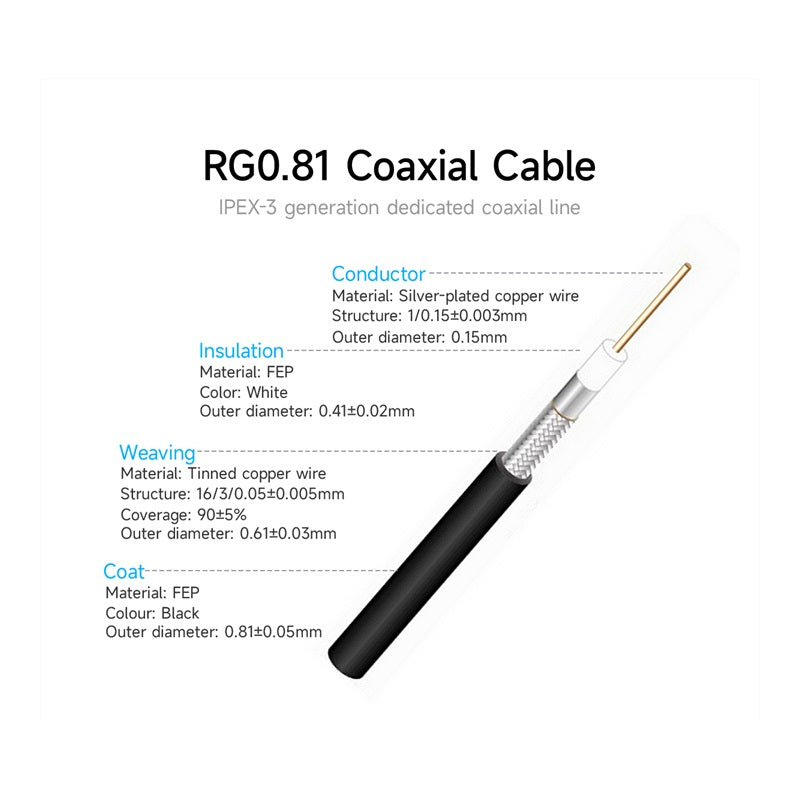
Features the latest IPEX-3 (MHF3) connector standard with 100mm low-loss coaxial cable, providing improved mechanical reliability with 50+ mating cycles and enhanced retention force compared to IPEX-I. The IPEX-3 connector is compatible with modern WiFi 6/6E modules, Bluetooth 5.x transceivers, and next-generation IoT wireless platforms from Intel, Qualcomm, MediaTek, Broadcom, Nordic Semiconductor, and other leading chipset manufacturers. The 50¦¸ coaxial cable maintains impedance matching and signal integrity across the entire 2.4GHz ISM band, ensuring optimal performance for WiFi (802.11b/g/n/ax), Bluetooth (Classic and BLE), ZigBee, and Thread applications.
Professional Test Report
Verified using professional RF test equipment at 2400-2500 MHz: VSWR measured consistently ¡Ü 2.0 across the entire 2.4GHz ISM band, ensuring acceptable impedance matching for WiFi and Bluetooth applications.

Peak gain of 2.0 dBi achieved with omnidirectional horizontal coverage, providing approximately 1.6x range improvement compared to 0 dBi reference antennas. The larger 30¡Á14mm aperture delivers 20-30% enhanced performance compared to smaller FPC antennas. Return loss (S11) better than -9.5 dB throughout the operational bandwidth, confirming adequate power transfer to 50¦¸ systems. Antenna efficiency exceeds 70% when properly mounted with recommended ground plane clearance, making it ideal for WiFi routers and access points requiring maximum coverage.

(Complete VSWR / S11 / radiation pattern / efficiency measurements available upon request)
Ideal Applications
WiFi Routers & Mesh Systems
Optimized for WiFi 5/6 routers, mesh network nodes, and wireless access points requiring enhanced 2.0 dBi gain for maximum coverage area and improved signal strength.
IoT Gateways & Smart Home Hubs
Ideal for ZigBee/Thread gateways, smart home controllers, and IoT hubs requiring reliable 2.4GHz connectivity with IPEX-3 interface and enhanced range performance.
Industrial Wireless Equipment
Suitable for industrial IoT gateways, M2M communication modules, and wireless sensor networks requiring robust 2.4GHz performance in challenging RF environments.
Wireless Network Cards & Adapters
Perfect for USB WiFi adapters, PCIe wireless cards, and M.2 WiFi modules requiring IPEX-3 connector compatibility with modern WiFi 6 chipsets.
Resources
For detailed technical specifications, integration guidelines, recommended ground plane layouts, and antenna placement recommendations for 2.4GHz applications with IPEX-3 connectors, please contact our technical support team or refer to the CDEBYTE FPC antenna application notes.
FAQ
Q: How does the 30¡Á14mm size improve performance compared to smaller FPC antennas?
A: The larger 30¡Á14mm aperture provides 20-30% enhanced range performance compared to smaller 19¡Á8mm or 25¡Á9mm FPC antennas. The increased radiating surface area improves antenna efficiency (>70% vs. 60-65% for smaller antennas) and delivers stronger signal strength at the same transmit power. This translates to extended WiFi coverage radius, improved Bluetooth range, and better performance in challenging RF environments with obstacles or interference. The enhanced gain is particularly beneficial for WiFi routers, access points, and IoT gateways where maximizing coverage area is critical.
Q: Is this antenna compatible with WiFi 6 and Bluetooth 5.x?
A: Yes, the TX2400-FPC3-3014 is fully compatible with WiFi 6 (802.11ax), WiFi 5 (802.11ac), and earlier WiFi standards operating in the 2.4GHz band. It also supports Bluetooth 5.0/5.1/5.2/5.3, BLE, ZigBee (IEEE 802.15.4), and Thread protocols. The VSWR ¡Ü2.0 specification ensures acceptable impedance matching across the 2.4GHz ISM band (2400-2500 MHz). The IPEX-3 connector is compatible with modern WiFi 6/6E modules from Intel (AX200, AX210), Qualcomm (QCA6391, QCA6696), MediaTek (MT7921, MT7922), and Broadcom, as well as Bluetooth 5.x transceivers from Nordic Semiconductor (nRF52, nRF53), Texas Instruments, and other manufacturers.
Q: What are the installation requirements for optimal performance?
A: For optimal performance, mount the antenna on or near a ground plane (minimum 50mm ¡Á 50mm recommended, larger is better for enhanced efficiency). Position the antenna at the edge or corner of your device enclosure, away from metal components, batteries, LCD displays, and other RF sources (minimum 10mm clearance). Clean the mounting surface with isopropyl alcohol, peel the 3M adhesive backing, and press firmly. Connect the IPEX-3 connector to your module's antenna port with gentle downward pressure until you hear/feel a click. The flexible substrate allows conformal mounting on curved surfaces with minimum 5mm bend radius. Verify performance using your module's signal strength indicators (RSSI) after installation.
Q: What is the expected WiFi range with this antenna?
A: WiFi range depends on transmit power, receiver sensitivity, environmental conditions, and antenna placement. With typical WiFi transmit power (15-20 dBm) and proper installation, expect 40-100 meters indoor range and 150-250 meters outdoor line-of-sight. The 2.0 dBi gain provides approximately 1.6x range improvement compared to 0 dBi reference antennas, and 20-30% better performance than smaller FPC antennas. For WiFi routers and access points, the enhanced gain translates to larger coverage area and improved signal strength in multi-room environments. Internal antenna placement typically reduces range by 20-30% compared to external antennas, but the compact integration is often worth this trade-off for modern router designs.