


cdsenet
Cdsenet TX2400-FPC-2509 2.4GHz FPC Antenna 2.0 dBi IPEX-1 25×9mm For IoT Communication
Cdsenet TX2400-FPC-2509 2.4GHz FPC Antenna 2.0 dBi IPEX-1 25×9mm For IoT Communication
1000 in stock
Couldn't load pickup availability
SKU:TX2400-FPC-2509




Product Overview
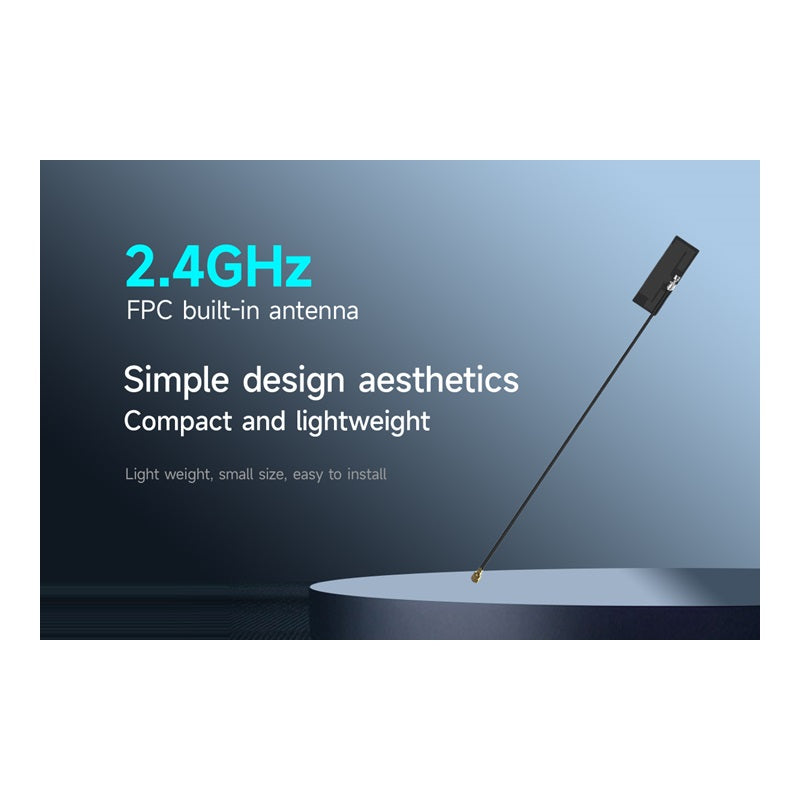
The TX2400-FPC-2509 is an ultra-compact built-in FPC (Flexible Printed Circuit) antenna engineered for the 2400–2500 MHz (2.4 GHz ISM) band, covering WiFi 802.11b/g/n, Bluetooth 5.x, Zigbee, and Thread protocols. Measuring just 25 × 9 mm with a 2.0 dBi peak gain and a measured VSWR of 1.47 @ 2.5 GHz, it is one of the smallest 2.4 GHz FPC antennas available for internal integration. The standard IPEX-1 (U.FL) connector with a 100 mm coaxial feeder ensures direct compatibility with mainstream 2.4 GHz wireless modules. Suited for smart home sensors, Bluetooth speakers, Zigbee gateways, and compact IoT devices. Updated March 2026.

Technical Specifications
| Parameter | Technical Value |
|---|---|
| Frequency Range | 2400–2500 MHz (2.4 GHz ISM) |
| Peak Gain | 2.0 dBi |
| VSWR | ≤ 2.0 (Measured: 1.47 @ 2.5 GHz) |
| Connector / Interface | IPEX-1 (U.FL, Generation 1) |
| Feeder Cable | 100 mm coaxial (customizable) |
| Impedance | 50 Ω |
| Antenna Material | FPC (Flexible Printed Circuit) |
| Dimensions | 25 mm × 9 mm |
| Polarization | Linear |
| Operating Temperature | −40 °C to +85 °C |
| Compliance | RoHS |
| Last Updated | March 2026 |
Product Details
Ultra-Compact 25 × 9 mm Footprint — Smallest-Class 2.4 GHz FPC
At 25 × 9 mm, the TX2400-FPC-2509 occupies less than half the board area of a standard 50 mm FPC antenna, making it the preferred choice for wearables, coin-cell IoT sensors, and ultra-slim smart home devices where PCB real estate is critical. The adhesive-backed FPC substrate (thickness < 0.3 mm) attaches directly to the inner wall of plastic enclosures without screws or brackets, tolerating bending radii down to 5 mm.

Standard IPEX-1 (U.FL) Connector — Universal 2.4 GHz Module Compatibility
The gold-plated IPEX-1 (U.FL) connector with a 100 mm coaxial feeder is directly compatible with mainstream 2.4 GHz wireless modules including Espressif ESP32/ESP8266, Nordic nRF52840, Silicon Labs EFR32MG, Texas Instruments CC2652, and Qualcomm QCA4020. The 50 Ω impedance match eliminates the need for external matching networks, and the measured VSWR of 1.47 @ 2.5 GHz confirms < 3% reflected power at the antenna port.
Professional Test Report
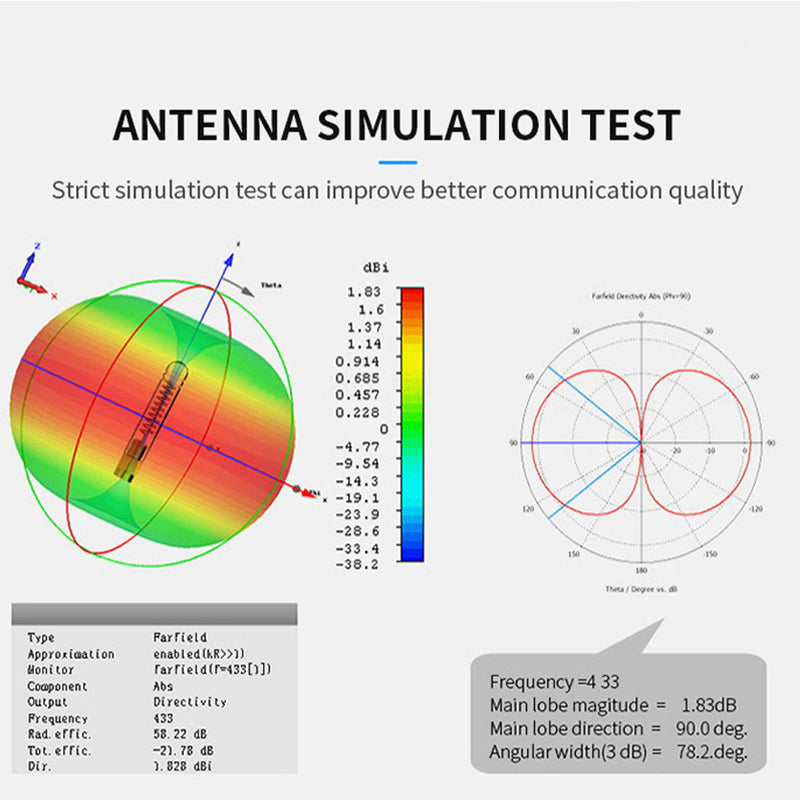
Measured with a vector network analyzer: VSWR = 1.47 @ 2.5 GHz and 2.22 @ 2.4 GHz. Best impedance match is achieved at the upper 2.4 GHz band edge (2.5 GHz), which aligns with WiFi channel 13/14 and Bluetooth upper channels. For applications centered at 2.45 GHz, the effective VSWR is approximately 1.8, corresponding to a return loss of ~10 dB.


Ideal Applications
📶 WiFi & Bluetooth Devices
Smart home gadgets, Bluetooth 5.x speakers, WiFi 802.11b/g/n sensors, and compact IoT nodes requiring a minimal 2.4 GHz antenna footprint.
🏠 Zigbee & Smart Home
Zigbee 3.0 end devices, Thread border routers, and Matter-compatible smart home sensors embedded in slim plastic housings.
⌚ Wearables & Medical IoT
Fitness trackers, health monitors, and coin-cell-powered BLE sensors where the 25 × 9 mm form factor enables integration in wristbands and patches.
🏭 Industrial Wireless Sensors
Compact industrial Zigbee/WiFi sensor nodes, wireless I/O modules, and SCADA edge devices operating in −40 °C to +85 °C environments.
Resources
📄 Download Datasheet — TX2400-FPC-2509 (PDF)Frequently Asked Questions
Q: Which wireless modules is the TX2400-FPC-2509 compatible with?
A: The TX2400-FPC-2509 uses a standard IPEX-1 (U.FL) connector with 50 Ω impedance, making it compatible with Espressif ESP32/ESP8266, Nordic nRF52840/nRF52833, Silicon Labs EFR32MG21/MG24, Texas Instruments CC2652R/CC1352, and any 2.4 GHz module with a U.FL antenna port. No external impedance matching network is required.
Q: The VSWR is 2.22 at 2.4 GHz — is this acceptable for WiFi and Bluetooth?
A: A VSWR of 2.22 corresponds to a return loss of approximately 7.7 dB, meaning about 17% of transmitted power is reflected. For short-range applications (smart home, BLE sensors within 10–20 m), this is generally acceptable. For maximum range, the antenna performs best at 2.5 GHz (VSWR 1.47, return loss ~14 dB). If your application is centered at 2.45 GHz, consider the TX2400-FPC3-5015 which achieves VSWR 1.18 at 2.45 GHz.
Q: How should the antenna be positioned inside the device for best performance?
A: Adhere the FPC element to the inner surface of a non-metallic (ABS, PC, or nylon) enclosure wall, maintaining at least 3–5 mm clearance from PCB ground planes, metal shields, and battery cells. Orient the antenna vertically for maximum omnidirectional coverage in the horizontal plane. Avoid routing the 100 mm feeder cable parallel to the FPC element to prevent coupling-induced VSWR degradation.
Q: What is the operating temperature range and environmental suitability?
A: The TX2400-FPC-2509 is rated for −40 °C to +85 °C, suitable for indoor consumer electronics, smart home devices, and light industrial sensor applications. The FPC substrate is RoHS-compliant. For high-humidity or outdoor deployments, apply conformal coating over the FPC radiating element or house it inside a sealed IP-rated enclosure to prevent moisture-induced frequency detuning.
Q: Can the 100 mm feeder cable length be customized for OEM production?
A: Yes. The standard feeder is 100 mm coaxial cable. Custom lengths are available for OEM orders — shorter cables reduce insertion loss, while cables up to ~200 mm add approximately 0.3–0.5 dB additional loss at 2.4 GHz. Contact our sales team with your target cable length, connector type, and order quantity for a custom quotation and lead time.