


cdsenet
Cdsenet TX230-XPH-300 230MHz 6dBi High-Gain Sucker Antenna SMA Feeder 3m
Cdsenet TX230-XPH-300 230MHz 6dBi High-Gain Sucker Antenna SMA Feeder 3m
100 in stock
Couldn't load pickup availability
SKU:TX230-XPH-300



Product Overview
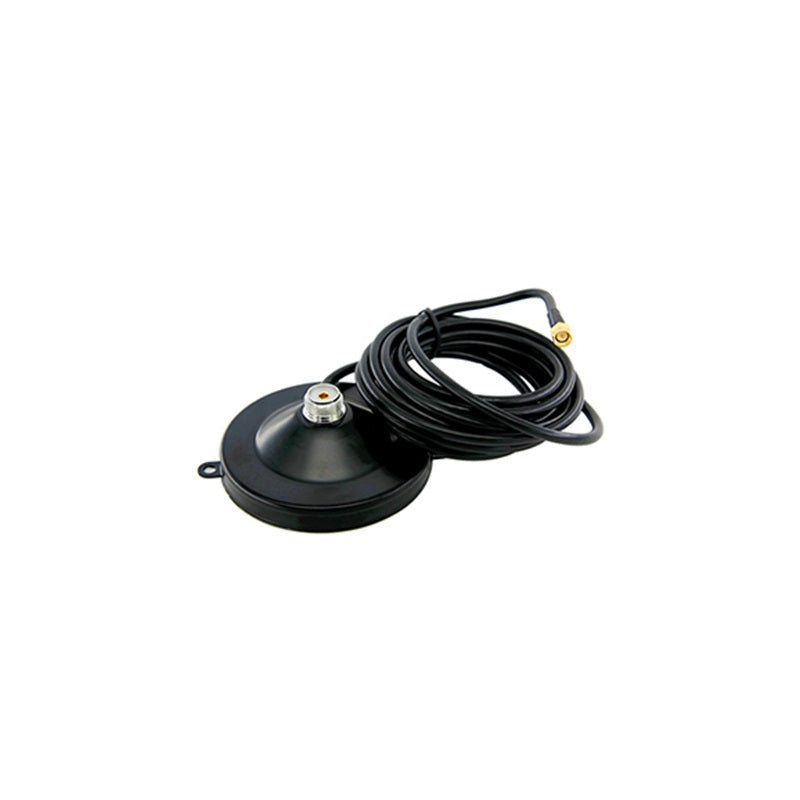
The TX230-XPH-300 is a 230MHz VHF high-gain sucker antenna with a middle-loaded induction coil design, engineered for vehicle-mounted data transmission, long-range industrial telemetry, and high-power wireless communication systems. It delivers a peak gain of 6.0 dBi — the highest in the 230MHz sucker antenna range — with a typical VSWR of 1.42 at 228MHz, covering the wide 210–250MHz VHF band. The 910mm stainless steel radiator, 90mm magnetic base, and 3-meter coaxial cable make it a field-deployable solution for mobile command units, fleet vehicles, and industrial IoT gateways requiring maximum VHF signal range. Updated March 2026.

Technical Specifications
| Parameter | Value |
|---|---|
| Frequency Range | 210 – 250 MHz (Center: 230 MHz) |
| Peak Gain | 6.0 dBi (middle-loaded design) |
| VSWR | ≤ 1.5 (Typ. 1.42 @ 228 MHz) |
| Impedance | 50 Ω |
| Connector Type | SMA-J (SMA Male, inner pin and thread) |
| Cable Length | 300 cm (3 m) |
| Antenna Length | 910 mm |
| Magnetic Base Diameter | 90 mm |
| Radiator Material | Stainless Steel |
| Radiation Pattern | Omnidirectional (vertical polarization) |
| Max Input Power | 50 W |
| Operating Temperature | -40 °C to +85 °C |
| Compliance | RoHS |
| Last Updated | March 2026 |
Product Details
Middle-Loaded Induction Coil — 6.0 dBi Gain in 910mm Stainless Steel Radiator
The TX230-XPH-300 achieves 6.0 dBi gain through a middle-loaded induction coil design, which electrically lengthens the radiator beyond its physical 910mm length to optimize current distribution for higher gain. At 230MHz, a standard quarter-wave radiator would measure approximately 326mm; the middle-loaded coil allows the 910mm stainless steel rod to resonate as a 5/8-wave equivalent, compressing the radiation pattern toward the horizon and increasing gain by approximately 3.5 dB over a standard quarter-wave antenna. The stainless steel construction resists corrosion and mechanical deformation in outdoor and vehicle-mounted deployments.

90mm Heavy-Duty Magnetic Base — Largest Ground Plane in the 230MHz Range
The 90mm diameter magnetic base is the largest in the CDSENET 230MHz sucker antenna range, providing a greater effective ground plane area that improves radiation efficiency and pattern symmetry for the high-gain 6.0 dBi radiator. The strong magnet secures the 910mm antenna to vehicle rooftops, equipment cabinets, and steel enclosure lids at highway speeds without additional fasteners. The 3-meter coaxial cable provides sufficient routing distance from the vehicle roof to the transceiver inside the cabin.

Professional Test Report
Measured with Agilent E5071C vector network analyzer: VSWR = 1.42 @ 228 MHz, confirming ≤1.5 across the 210–250 MHz operating band. Return loss ≈ 15 dB at the measured frequency point.


Ideal Applications
Vehicle-Mounted Data Transmission
Fleet vehicles, mobile command units, and survey equipment requiring a high-gain 230MHz VHF antenna with magnetic roof-mount and 3m cable routing to the in-cabin transceiver.
Long-Range Industrial Telemetry
Remote wireless telemetry, SCADA communication nodes, and industrial data acquisition systems where the 6.0 dBi gain extends communication range compared to standard 4.0 dBi sucker antennas.
Digital Radio & Base Stations
230MHz digital radio station systems, fixed base station antennas, and high-power wireless communication nodes requiring 50W input power capacity and broad 210–250MHz band coverage.
Agricultural & Infrastructure Monitoring
Wide-area agricultural sensor networks and infrastructure monitoring systems using 230MHz VHF, where the 6.0 dBi gain provides extended range over standard 2.5–4.0 dBi antennas.
Resources
📄 Download Datasheet (PDF)Frequently Asked Questions
Q: What does the middle-loaded design mean and how does it achieve 6.0 dBi?
A: A middle-loaded antenna uses an induction coil positioned along the radiator to electrically lengthen it beyond its physical size, allowing the antenna to resonate as a 5/8-wave equivalent at 230MHz. This compresses the radiation pattern toward the horizon (reducing energy radiated upward/downward) and increases gain in the horizontal plane to 6.0 dBi — approximately 2 dB more than a standard 4.0 dBi quarter-wave sucker antenna. The trade-off is a narrower vertical beamwidth, which is acceptable for ground-level communication links.
Q: Is the TX230-XPH-300 suitable for high-speed vehicle mounting?
A: Yes. The 90mm magnetic base provides strong holding force on ferromagnetic vehicle rooftops, and the stainless steel radiator resists wind-induced vibration and corrosion from rain and road salt. The antenna is rated for -40°C to +85°C, covering the full range of vehicle operating environments. For highway speeds above 120 km/h, verify the magnetic base holding force against the vehicle's roof material thickness, as thicker steel panels reduce effective magnetic force.
Q: How does the TX230-XPH-300 compare to the TX230-XP-200 and TX230-TB-300?
A: The TX230-XPH-300 delivers 6.0 dBi gain with a 910mm stainless steel radiator, 90mm base, and 300cm cable — optimized for maximum range in vehicle and base station deployments. The TX230-XP-200 (4.0 dBi, ABS+PC housing, 200cm cable) is more compact and suited for industrial enclosure mounting. The TX230-TB-300 (5.0 dBi, pure copper rod, 300cm RG58 cable) offers a middle ground. Choose XPH-300 when maximum gain and vehicle-grade durability are the priority.
Q: Can this antenna be used with 433MHz or other sub-1GHz modules?
A: No. The TX230-XPH-300 is tuned for 210–250MHz. Using it at 433MHz will result in a VSWR exceeding 5.0 and a communication range reduction of 80% or more, and may stress the transmitter PA stage. For 433MHz applications, use a dedicated 433MHz antenna. For 170MHz applications, use the TX170-TB-300 or TX170-XP-200. Always match the antenna's center frequency to your module's operating frequency.
Q: What is the operating temperature range and is the stainless steel radiator suitable for outdoor use?
A: The TX230-XPH-300 is rated for -40°C to +85°C. The stainless steel radiator is corrosion-resistant and suitable for long-term outdoor deployment in rain, humidity, and coastal salt-air environments. For direct rain exposure at the SMA connector junction, apply self-amalgamating tape or a weatherproof boot to prevent moisture ingress. The stainless steel construction provides significantly better corrosion resistance than copper or aluminum rod alternatives in harsh outdoor environments.