


cdsenet
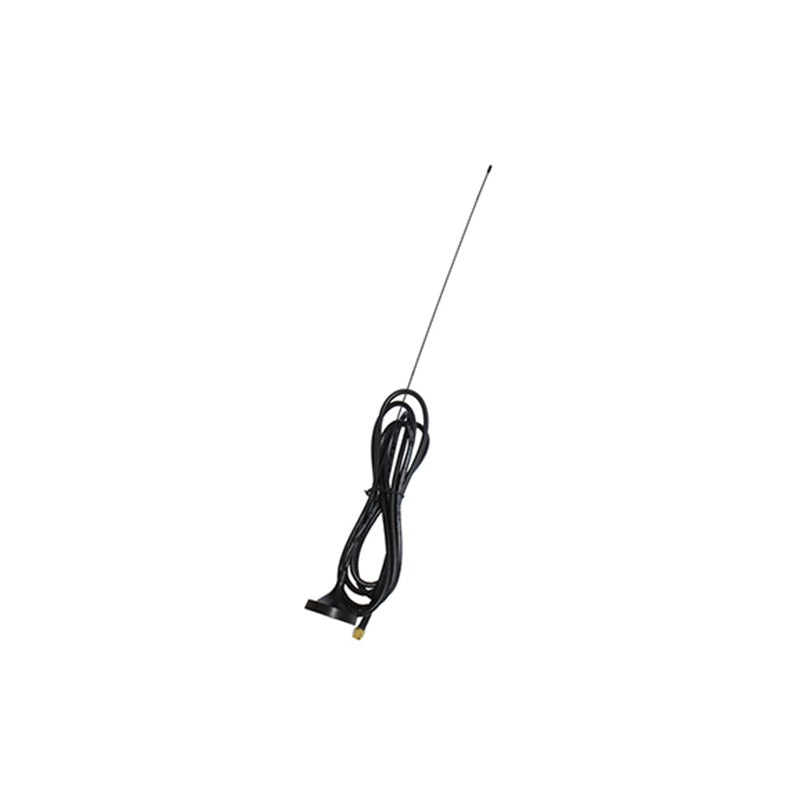
Cdsenet TX230-XP-200 230MHz VHF Sucker Antenna 4.0dBi SMA-J 2m ABS+PC For Wireless Module Communication
Cdsenet TX230-XP-200 230MHz VHF Sucker Antenna 4.0dBi SMA-J 2m ABS+PC For Wireless Module Communication
1000 in stock
Couldn't load pickup availability
SKU:TX230-XP-200




Product Overview
The TX230-XP-200 is a 230MHz VHF sucker antenna with an ABS+PC enclosure, engineered for industrial RF transceivers, wireless data modules, and remote monitoring systems. It delivers a measured peak gain of 4.0 dBi and a typical VSWR of 1.12 at 230MHz, covering the 225–237.6MHz VHF band (recommended 230 ± 5MHz). The durable ABS+PC housing protects the radiator in industrial environments, while the 200cm feeder cable provides generous routing distance between the antenna mounting point and the host device. Updated March 2026.

Technical Specifications
| Parameter | Value |
|---|---|
| Frequency Range | 225 – 237.6 MHz (Recommended: 230 ± 5 MHz) |
| Peak Gain | 4.0 dBi |
| VSWR | ≤ 1.5 (Typ. 1.12 @ 230 MHz) |
| Impedance | 50 Ω |
| Connector Type | SMA-J (SMA Male, inner pin) |
| Cable Length | 200 cm (2 m) |
| Antenna Housing | ABS + PC (impact-resistant, UV-stable) |
| Radiation Pattern | Omnidirectional (vertical polarization) |
| Max Input Power | 50 W |
| Operating Temperature | -40 °C to +85 °C |
| Compliance | RoHS |
| Last Updated | March 2026 |
Product Details
ABS+PC Enclosed Sucker Base — Impact-Resistant Industrial Housing
The ABS+PC (Acrylonitrile Butadiene Styrene + Polycarbonate) housing encloses the radiator and protects it from mechanical impact, UV degradation, and chemical exposure in industrial environments. The magnetic sucker base secures the antenna to any ferromagnetic metal surface, simultaneously acting as a ground plane to support the 4.0 dBi gain. The enclosed design protects the radiator from accidental bending or contact damage during field deployment — an advantage over bare copper rod alternatives in high-traffic industrial settings.

SMA-J Connector with 200cm Long-Reach Feeder Cable
The SMA-J (male, inner pin) connector provides a secure 50Ω interface to SMA-K female ports on 230MHz wireless transceivers and industrial modules. The 200cm feeder cable provides maximum routing flexibility for installations where the antenna must be positioned far from the host device — such as on a vehicle roof or equipment cabinet top while the transceiver remains inside the enclosure. The 50W maximum input power rating accommodates higher-power 230MHz transmitters.
Professional Test Report
Measured with Agilent E5071C vector network analyzer: VSWR = 1.12 @ 230 MHz, confirming ≤1.5 across the 225–237.6 MHz operating band. Return loss ≈ 24 dB at center frequency.


Ideal Applications
230MHz RF Transceivers & Digital Radio
230MHz wireless RF transceivers, digital radio station systems, and handheld terminals requiring an external sucker antenna with long cable reach and ruggedized housing.
Industrial Remote Monitoring & Telemetry
Remote telemetry systems, industrial sensing nodes, and SCADA communication devices in the VHF band where the 200cm cable allows antenna placement at optimal height.
Vehicle & Mobile Deployment
Magnetic roof-mount on fleet vehicles, survey equipment, and mobile command units for 230MHz VHF communication, with the 200cm cable routing inside the vehicle cabin.
Smart Grid & Agricultural Monitoring
Smart grid monitoring nodes and wide-area agricultural sensor networks using 230MHz VHF for reliable long-range uplink with strong ground-wave propagation.
Resources
📄 Download Datasheet (PDF)Frequently Asked Questions
Q: What is the difference between the TX230-XP-200 and TX230-TB-300?
A: Both are 230MHz sucker antennas with SMA-J connectors and 4.0 dBi gain. The TX230-XP-200 uses an ABS+PC enclosed housing (impact-resistant, UV-stable) with a 200cm cable. The TX230-TB-300 uses a bare pure copper rod radiator with a larger magnetic base and a 300cm RG58 cable. Choose XP-200 for ruggedized enclosed housing and vehicle/industrial deployments; choose TB-300 for maximum cable reach (300cm) and open-air installations where the bare copper rod is not a concern.
Q: Does the TX230-XP-200 require a metal ground plane?
A: Yes. The magnetic sucker base must be mounted on a ferromagnetic metal surface (steel or iron) to adhere and to function as a ground plane. A larger metal surface improves radiation efficiency — a minimum of 150 × 150mm is recommended, with 200 × 200mm or larger preferred. Mounting on plastic, wood, or fiberglass will prevent the base from holding and will degrade gain by 2–3 dBi. For non-metallic surfaces, place a steel sheet under the base.
Q: Is this compatible with 433MHz or other sub-1GHz modules?
A: No. The TX230-XP-200 is tuned for 225–237.6MHz. Using it at 433MHz will result in a VSWR exceeding 5.0 and a communication range reduction of 80% or more. For 433MHz LoRa or FSK applications, use a dedicated 433MHz antenna. For 170MHz applications, use the TX170-XP-200. Always match the antenna's center frequency to your module's operating frequency.
Q: What is the maximum input power and is it suitable for high-power transmitters?
A: The TX230-XP-200 is rated for a maximum input power of 50W, making it suitable for higher-power 230MHz transmitters used in industrial wireless systems and digital radio stations. This is significantly higher than the 10W limit of direct-mount rubber antennas such as the TX230-JK-11. Ensure the cable and connector are rated for the transmitter's output power before use.
Q: Is the ABS+PC housing suitable for outdoor use?
A: Yes. The ABS+PC housing is UV-stable and impact-resistant, rated for -40°C to +85°C, making it suitable for outdoor industrial deployments. For direct rain exposure, protect the SMA connector junction with self-amalgamating tape or a weatherproof boot to prevent moisture ingress at the connector interface. The enclosed housing provides mechanical protection that bare copper rod antennas do not offer in high-traffic or exposed environments.