


cdsenet
Cdsenet TX230-JKD-20 230MHz TPEE Flexible Rubber Antenna 2.5dBi SMA-J IoT for RF Wireless Module Omnidirectional Vertical polarization
Cdsenet TX230-JKD-20 230MHz TPEE Flexible Rubber Antenna 2.5dBi SMA-J IoT for RF Wireless Module Omnidirectional Vertical polarization
200 in stock
Couldn't load pickup availability
SKU:TX230-JKD-20



Product Overview
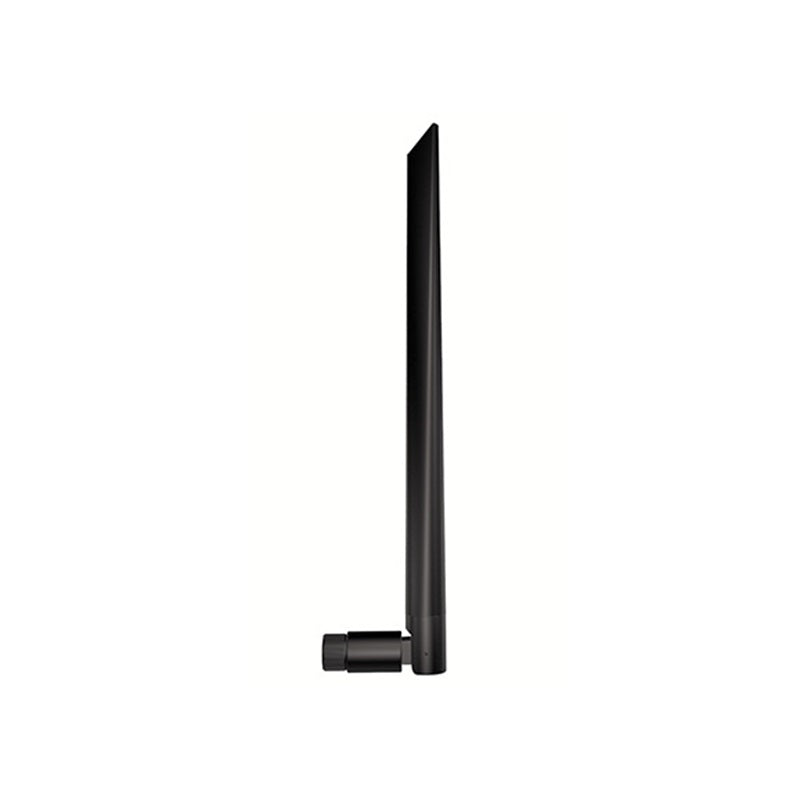
The TX230-JKD-20 is a 230MHz VHF flexible rod antenna with a TPEE radome and copper radiator, engineered for space-constrained installations on wireless RF modules and industrial IoT terminals. It delivers a peak gain of 2.5 dBi across the 220–240MHz operating band with a maximum input power of 20W. The TPEE radome allows the antenna to be bent to various angles for restricted-space mounting. Note: the VSWR specification for this model is ≤3.0 (typ. 2.68 @ 230MHz), reflecting the physical constraints of achieving a compact flexible form factor at sub-300MHz VHF frequencies — see FAQ for guidance on selecting the appropriate antenna for your application. Updated March 2026.

Technical Specifications
| Parameter | Value |
|---|---|
| Frequency Range | 220 – 240 MHz (Center: 230 MHz) |
| Peak Gain | 2.5 dBi |
| VSWR | ≤ 3.0 (Typ. 2.68 @ 230 MHz) — compact flexible VHF form factor |
| Impedance | 50 Ω |
| Connector Type | SMA-J (SMA Male, nickel-plated) |
| Radome Material | TPEE (flexible, weather-resistant) |
| Radiator Material | Copper |
| Radiation Pattern | Omnidirectional (vertical polarization) |
| Max Input Power | 20 W |
| Operating Temperature | -40 °C to +85 °C |
| Compliance | RoHS |
| Last Updated | March 2026 |
Product Details
TPEE Flexible Radome — Bend-to-Fit for Restricted Spaces
The TPEE (Thermoplastic Polyester Elastomer) radome provides high elasticity and weather resistance, allowing the antenna to be bent to various angles for installations in enclosures where a rigid vertical antenna cannot fit. TPEE is more flexible and crack-resistant than standard rubber compounds, maintaining its mechanical properties across the full -40°C to +85°C operating range. The copper radiator inside the TPEE body retains its electrical length after bending, though radiation pattern symmetry will vary with bend angle.

Nickel-Plated SMA-J Connector — 20W Rated for Industrial Modules
The nickel-plated SMA-J (male, inner pin) connector provides a corrosion-resistant, 50Ω interface to SMA-K female ports on 230MHz wireless modules and industrial transceivers. Rated for 20W maximum input power — double the 10W rating of the TX230-JK-11 — the TX230-JKD-20 is suitable for higher-power 230MHz transmitters while maintaining the flexible form factor. The connector is rated for repeated mating cycles in field-serviceable installations.
Professional Test Report
Measured with a vector network analyzer (Agilent E5071C equivalent): VSWR = 2.68 @ 230 MHz, within the ≤3.0 specification. At VSWR = 2.68, reflected power is approximately 20% (return loss ≈ 7 dB). This is a characteristic trade-off of achieving a compact, flexible form factor at 230MHz, where the antenna's physical length is significantly shorter than the ideal quarter-wavelength of ~326mm.


Ideal Applications
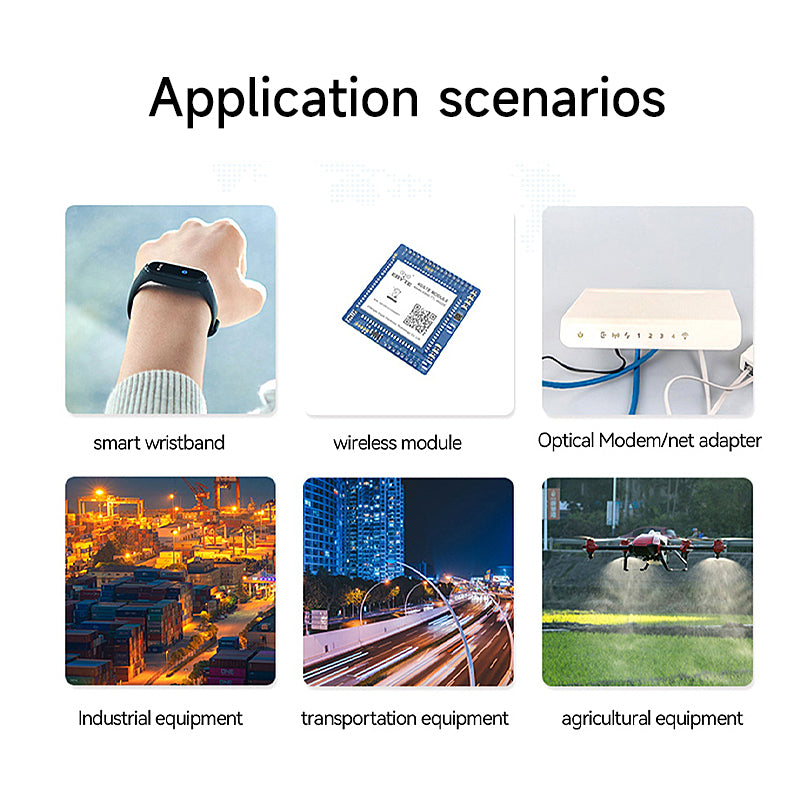
Space-Constrained 230MHz Modules
Wireless RF modules and industrial transceivers in compact enclosures where a rigid 110mm+ antenna cannot be mounted vertically and a flexible bend-to-fit solution is required.
Industrial IoT & Telemetry
Remote sensing nodes, industrial telemetry systems, and smart grid monitoring devices operating at 230MHz where installation flexibility is prioritized over maximum impedance matching.
Agricultural Sensor Networks
Long-range IoT sensor nodes for soil, weather, and irrigation monitoring using 230MHz VHF, where the flexible antenna accommodates varied enclosure orientations in field deployments.
Higher-Power VHF Terminals
230MHz wireless terminals and handheld devices with transmit power up to 20W, where the TX230-JKD-20's higher power rating provides headroom over the 10W-rated TX230-JK-11.
Resources
📄 Download Datasheet (PDF)Frequently Asked Questions
Q: Why is the VSWR specification ≤3.0 instead of ≤1.5 or ≤2.0?
A: At 230MHz, the ideal quarter-wavelength radiator is approximately 326mm. The TX230-JKD-20 uses a physically shorter, flexible TPEE-encased radiator to enable bend-to-fit installation in compact enclosures. This size reduction requires impedance matching trade-offs that result in a higher VSWR compared to full-length antennas. At VSWR = 2.68, approximately 20% of transmitter power is reflected. For applications where impedance matching is critical, the TX230-JK-11 (VSWR 1.09) or TX230-TB-300 (VSWR ≤1.5) are recommended alternatives.
Q: When should I choose the TX230-JKD-20 over the TX230-JK-11?
A: Choose the TX230-JKD-20 when: (1) your enclosure cannot accommodate a rigid 110mm antenna vertically and requires a flexible bend-to-fit solution, or (2) your transmitter output power exceeds 10W (the TX230-JK-11's limit) up to 20W. Choose the TX230-JK-11 when impedance matching is the priority (VSWR 1.09 vs 2.68) and your enclosure can accommodate a rigid vertical antenna. For external mounting with maximum gain, use the TX230-TB-300 sucker antenna.
Q: Is the TX230-JKD-20 compatible with 433MHz or other sub-1GHz modules?
A: No. The TX230-JKD-20 is tuned for 220–240MHz. Using it at 433MHz will result in a VSWR exceeding 5.0 and a communication range reduction of 80% or more. For 433MHz LoRa or FSK applications, use a dedicated 433MHz antenna. For 170MHz applications, use the TX170-XP-200 or TX170-TB-300. Always match the antenna's center frequency to your module's operating frequency.
Q: Does bending the antenna affect its RF performance?
A: Yes. Bending the antenna alters the radiation pattern — a bent antenna no longer radiates in a purely omnidirectional pattern. The VSWR specification of ≤3.0 is measured with the antenna in a straight vertical position. Bending may slightly shift the resonant frequency and further increase VSWR. For applications requiring consistent omnidirectional coverage, mount the antenna vertically. Use the bend capability only for space-constrained installations where pattern symmetry is less critical than physical fit.
Q: What is the maximum input power and operating temperature?
A: The TX230-JKD-20 is rated for a maximum input power of 20W and an operating temperature of -40°C to +85°C. The 20W power rating is double that of the TX230-JK-11 (10W), making it suitable for higher-power 230MHz transmitters. The TPEE radome is weather-resistant and RoHS-compliant. For direct outdoor exposure, protect the SMA connector junction with self-amalgamating tape to prevent moisture ingress.