


cdsenet
Cdsenet TX230-JK-11 230MHz VHF Rubber Antenna 2.5dBi SMA-J 110mm IoT for Wireless Module Flexible Rubber Antenna
Cdsenet TX230-JK-11 230MHz VHF Rubber Antenna 2.5dBi SMA-J 110mm IoT for Wireless Module Flexible Rubber Antenna
200 in stock
Couldn't load pickup availability
SKU:TX230-JK-11




Product Overview
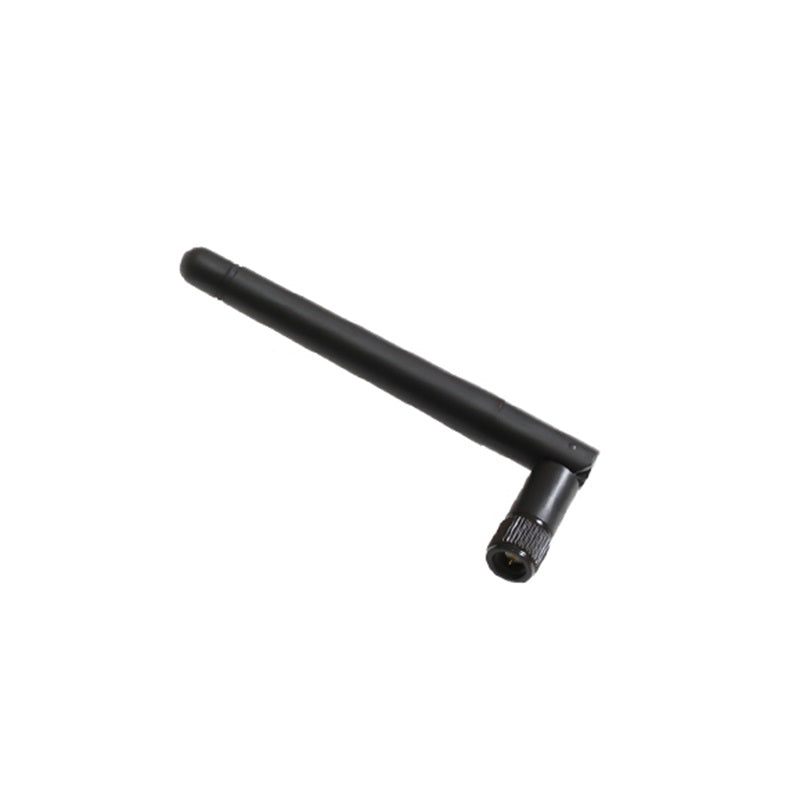
The TX230-JK-11 is a 230MHz VHF omnidirectional rubber stick antenna engineered for direct-mount use on wireless RF modules, handheld terminals, and industrial IoT devices. It delivers a measured peak gain of 2.5 dBi and an exceptionally low typical VSWR of 1.09 at 230MHz — corresponding to a return loss of approximately 26 dB — across the 225–237MHz operating band. The flexible rubber radome allows the 110mm antenna to be bent to various mounting angles without damaging the internal radiator, making it suitable for panel-mount and handheld device installations. Updated March 2026.

Technical Specifications
| Parameter | Value |
|---|---|
| Frequency Range | 225 – 237 MHz (Center: 230 MHz ± 5 MHz) |
| Peak Gain | 2.5 dBi |
| VSWR | ≤ 1.5 (Typ. 1.09 @ 230 MHz — return loss ≈ 26 dB) |
| Impedance | 50 Ω |
| Connector Type | SMA-J (SMA Male, nickel-plated) |
| Antenna Height | 110 mm (radius: 8 mm) |
| Radiation Pattern | Omnidirectional (vertical polarization) |
| Max Input Power | 10 W |
| Operating Temperature | -40 °C to +85 °C |
| Compliance | RoHS |
| Last Updated | March 2026 |
Product Details
Flexible Rubber Radome — Bend-to-Angle Mounting
The rubber radome allows the 110mm antenna body to be bent to various angles (typically 0°–90°) without damaging the internal radiator or degrading RF performance. This flexibility is particularly useful for panel-mount installations where a vertical antenna would protrude excessively, or for handheld terminals where the antenna must fold flat during transport. The rubber material also provides mechanical protection against accidental impact in field environments.

Nickel-Plated SMA-J Connector — 50Ω Precision Interface
The nickel-plated SMA-J (male, inner pin) connector provides a corrosion-resistant, 50Ω impedance-matched interface to SMA-K female ports on 230MHz wireless modules, handheld transceivers, and industrial IoT gateways. The precision-machined connector body minimizes signal reflection at the antenna-module junction, contributing to the measured VSWR of 1.09 — one of the lowest values achievable in a direct-mount rubber antenna at VHF frequencies. Rated for repeated mating cycles in field-serviceable installations.
Professional Test Report
Measured with Agilent E5071C vector network analyzer: VSWR = 1.09 @ 230 MHz, confirming ≤1.5 across the full 225–237 MHz operating band. Return loss ≈ 26 dB at center frequency — indicating that less than 0.25% of input power is reflected at the antenna port.


Ideal Applications
230MHz Wireless RF Modules
Direct-mount antenna for 230MHz data transmission modules, handheld wireless terminals, and VHF band transceivers with SMA-K female ports.
Industrial IoT & Telemetry
Remote sensing nodes, industrial telemetry systems, and low-power IoT sensor networks operating in the 230MHz VHF band for long-range data acquisition.
Smart Metering & Utility
Wireless water, gas, and electricity meter reading systems using 230MHz VHF for reliable long-range uplink in urban and suburban utility infrastructure.
Agricultural & Environmental Monitoring
Wide-area sensor networks for soil, weather, and irrigation monitoring using 230MHz sub-300MHz VHF for improved ground-level propagation over long distances.
Resources
📄 Download Datasheet (PDF)Frequently Asked Questions
Q: Is the TX230-JK-11 compatible with all 230MHz wireless modules?
A: The TX230-JK-11 is tuned for 225–237MHz (center 230MHz ± 5MHz) and is compatible with any 230MHz wireless module featuring an SMA-K (female) port. Confirm your module operates within this narrow band before ordering — modules operating at 220MHz or 240MHz may fall outside the optimized range and experience higher VSWR. For broader 210–260MHz coverage, consider the TX230-TB-300 sucker antenna instead.
Q: What does a VSWR of 1.09 mean in practical terms?
A: A VSWR of 1.09 corresponds to a return loss of approximately 26 dB, meaning less than 0.25% of the transmitted power is reflected back from the antenna port. This is exceptionally close to a perfect impedance match (VSWR = 1.0) and indicates that virtually all transmitter power is radiated. In practical terms, this minimizes stress on the transmitter PA stage and maximizes effective radiated power for the given gain of 2.5 dBi.
Q: What is the maximum input power and is it suitable for high-power systems?
A: The TX230-JK-11 is rated for a maximum input power of 10W. This covers the output power range of most 230MHz wireless data modules (typically 10–500mW) and low-power transceivers. For systems with transmit power exceeding 10W, use a higher-power-rated external antenna such as the TX230-TB-300 (rated 50W). Exceeding the 10W limit may cause thermal damage to the antenna's internal radiator or connector.
Q: Can the antenna be bent and will it affect RF performance?
A: Yes. The flexible rubber radome allows the antenna to be bent to angles typically between 0° and 90° without damaging the internal radiator. Bending the antenna will alter the radiation pattern — a bent antenna no longer radiates in a purely omnidirectional pattern. For applications requiring a consistent omnidirectional pattern, mount the antenna vertically. Use the bend capability only for space-constrained installations where pattern symmetry is less critical.
Q: What is the operating temperature range and is it suitable for outdoor use?
A: The TX230-JK-11 is rated for -40°C to +85°C. The rubber radome is weather-resistant and suitable for protected outdoor installations. The antenna is not independently IP-rated; for direct rain or high-humidity exposure, ensure the SMA connector junction is protected with self-amalgamating tape. For fully outdoor deployments requiring IP67 or higher protection, use an externally mounted sucker or fiberglass antenna with a sealed connector.